With Over 4,200 Cannabis Licenses Issued So Far, Oklahoma Will Now Try and Approve Recreational Marijuana

With Over 4,200 Cannabis Licenses Issued So Far, Oklahoma Will Now Try and Approve Recreational Marijuana

[ad_1]

Oklahoma recreational cannabis

Oklahoma Activists Submit Signatures for Recreational Pot Legalization Initiative


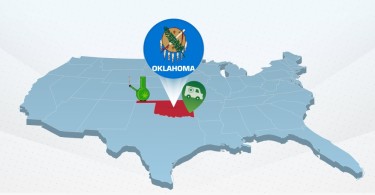
Cannabis activists in Oklahoma have achieved a significant feat in their attempt to legalize recreational cannabis in the state. This week, activists have submitted more than 160,000 signatures on petitions qualifying recreational cannabis legalization ballot initiatives for the 2022 general election.


The signatures for State Question 820 were submitted by the Oklahomans for Sensible Marijuana Laws to the state Capitol. The submission was made on Tuesday, 5th of July 2002, close to a month before the November ballot qualification deadline.


If enacted, State Question 820 would legalize recreational cannabis use for individuals aged 21 years and older. The Oklahoma Medical Marijuana Authority will also be tasked with the initiative to draft and implement regulations to oversee the new recreational cannabis industry.


The campaign’s representatives claimed that getting the signatures needed to qualify for the ballot initiative was quick across the state. According to them, polling data also suggested that Oklahomans showed strong support for recreational cannabis use. The Oklahomans for Sensible Marijuana Laws had until August 1 to collect 94,910 to qualify the initiative for this year’s ballot. But surprisingly, the required signatures were eclipsed by approximately 70,000 signatures following Tuesday’s submission.


According to Michelle Tilley, the campaign director, the number of signatures they were able to collect shows that there’s enough momentum for the campaign. Most importantly, it shows that Oklahomans are prepared to vote for recreational marijuana legalization.


Ryan Kiesel, the senior campaign adviser also indicated that he anticipates the initiative to be popular among voters during the November elections. Taking to local media, Ryan affirmed that activists are expecting Oklahomans to say yes to the initiative.


Initiative Encompasses Provisions for Expungement of Cannabis-Related Crimes

e Question 820 also features provisions that enable individuals with previous cannabis convictions to appeal to the courts to nullify their conviction and have their criminal record erased. Representatives of the campaign strongly believe that thousands of people would benefit from a clean criminal record under the initiative.


Kiesel affirmed that Oklahomans are in support of the bill as they believe people should not be repeatedly punished for an action that’s no longer criminal.


State Question 820 is also said to set a 15% tax on recreational cannabis sales, which slightly doubles the 7% tax rate tax on medical cannabis sales. Revenues generated from taxes on reactions to cannabis sales would then be allocated to drug treatment programs, school districts, the state court system, and local governments that permit the operations of legal recreational cannabis businesses. Kiesel also pointed out that legalized adult-use cannabis provides the state with a new and massive revenue source.


Kiesel trying to set things clear affirmed that medical cannabis was never meant to generate huge revenue for Oklahoma, it is purely about medicine. But when it comes to recreational cannabis, it is a huge revenue generator. The revenue that is presently generated from medical cannabis will be considered very small, considering the amount of revenue expected from recreational cannabis sales. 


Meanwhile, as petitions supporting the initiative gained massive support in the metropolitan areas of Oklahoma, Question 820 also has considerable voters outside Oklahoma City and Tulsa. Kiesel affirmed that the campaign starting from Ardmore to Broken Bow to Woodward has reached everywhere.


Based on Kiesel’s assertions, the initiative had received massive support and the momentum for the campaign is at an all-time high. The number of signatures collected indicates that Oklahomans are prepared to vote for recreational cannabis laws, facilitating huge investments in crucial state services.


Recreational Cannabis Could Also be Legalized By Constitutional Amendment Initiative in Oklahoma


A different group, known as Oklahomans for Responsible Cannabis Action, is also campaigning for the enactment of a state constitutional initiative. The initiative is said to help legalize recreational cannabis sales and use for adults. However, given that State Question 819, would revise the Oklahoma Constitution, the faction has been given approximately 3 months to amass 177,957 signatures in favor of the initiative. By so doing, the endeavor will be able to qualify for the November ballot initiative.


In an attempt to amend the present Oklahoma Constitution, State Question 819 would be accountable to only nominal revisions of its requirements by the state legislature if enacted. Nonetheless, the need for a more significant change would require Oklahomans to take another vote. But as things are, State Question 820 is at risk of more substantial alterations by lawmakers considering it is a statutory initiative.


The Oklahomans for Responsible Cannabis Action’s campaign director, Jed Green, claimed that recreational cannabis legalization should be consecrated in the state constitution. In so doing, it will be protected from any attempt of being rolled back by a state legislature that is against legal cannabis use by adults.


According to Green, the present situation being faced with the established statutory measure is that the legislature is relating the Oklahoma double standard to cannabis businesses. Green affirmed that the legislature came in an unexpectedly increased several fees while enacting new regulations on cannabis businesses.


With the enactment of State Question 788, Oklahomans legalized the sales and use of medical cannabis in 2018. But since thr initiative is also a statutory initiative, the Oklahomans for Responsible Cannabis Action is now campaigning for the enactment of State Question 818. State Question 818 is said to revise the state constitution to protect the legalization of the sale and use of medical cannabis. The group has until thr 22nd of August 2022 to collect more than 170,000 signatures for both proposed initiatives. 


Conclusion


The cannabis industry has witnessed nothing but support and growth in Oklahoma in the last few years. With medical cannabis reforms have come into full play, many Oklahomans are now well aware of the massive economic benefits the state can again from the legalization of recreational cannabis.


Considering the number of signatures on the petition, truly, support for cannabis legalization is at an all-time high and Oklahomans are ready to vote in the State Question 820 come November.


MORE ON OKLAHOMA WEED, READ THESE…
OKLAHOMA RECREATIONAL CANNABIS

CAN OKLAHMOA GET RECREATIONAL CANNABIS APPROVED?

OR..
OKLAHOMA APPROVES MMJ

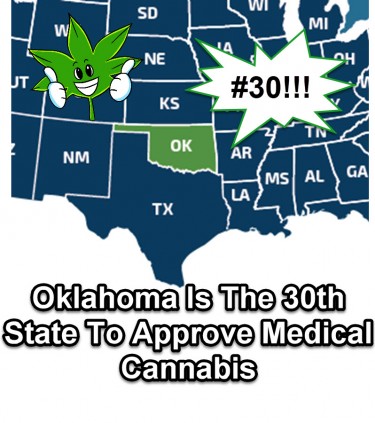
OKLAHOMA APPROVES MEDICAL MARIJUANA, THE 30TH STATE!

[ad_2]

Source link

Should Cannabis Products Have Mental Health Warnings on the Packaging?

Should Cannabis Products Have Mental Health Warnings on the Packaging?

[ad_1]

mental health warnings on cannabis

Over the last few years, high THC cannabis has caught the attention of medical professionals and parents alike – but not in a good way.


There has been an increased incidence of schizophrenia and psychosis cases attributed to consuming high THC cannabis, particularly among the youth. On the other hand, for recreational users and other types of medical marijuana patients (including those struggling with severe depression, treatment-resistant post-traumatic stress disorder, cancer, and many more), the recent development of extremely potent cannabis – with concentrates sometimes reaching as much as 95% THC – has been nothing but good news. Sure, people say that the choices we have today are definitely not your grandparents’ weed.


Thanks to developments in genetics, we now have a wide array of THC products to choose from. These range from 0.3% THC all the way up to the high 90’s. And these types of products are available in dispensaries around the nation wherever it’s been legalized for adult use, medical use, or both.


Cannabis is Safe, But Has Never Been Touted as a Cure-All


 A quick look at any search engine will show you a vast array of clinical studies done that show the efficacy and safety of cannabis for treating long list of mental and physical health disorders. There has also been a great emphasis on its efficacy with mental health issues, a serious medical problem that the industry is struggling to treat with effectiveness and precision.


According to the National Alliance on Mental Health, untreated mental health disorders costs the United States some $300 billion annually due to productivity losses. In addition, mental health illness and substance abuse disorders are commonly co-occurring issues, with many of those struggling with mental health disorders turning to dangerous antidepressants that one can easily overdose on. This leads to a (preventable) increase in the death toll. People with untreated mental health disorders, especially the more serious types such as psychosis and schizophrenia, tend to self-medicate which is why they often struggle with substance use disorders.


The real problem here is the absurdly high costs of mental health care in the country. Being able to afford a therapist or psychiatrist is something that is exclusively for the rich, while only very few can access programs that are designed to help the impoverished. I mean – average therapist and psychiatric fees start at least at $100 up to $300 PER APPOINTMENT. Can we wrap our heads around this fact? And one with serious mental health problems would need several of these sessions throughout the year, maybe several a month even, just to get better.


No wonder people are self-medicating.

And with the increased access of marijuana thanks to legalization, people are self-medicating with it. And we’re seeing results that are unfortunate.


“Studies have suggested that high potency cannabis is linked to higher likelihood of psychosis, depression, anxiety, and cannabis dependence, but these studies hadn’t been able to account for people’s early mental health symptoms, and hadn’t always taken into account whether the risks of high potency use were over and above the risks from using cannabis everyday,” says a 2020 study from JAMA Psychiatry.


So while a great majority of the population is enjoying tremendous relief from conditions that pharmaceutical drugs weren’t able to help them with, or because they simply do not want to use synthetic medications, there’s the growing minority of cases that are sounding the alarm on the easy accessibility of high THC cannabis particularly among those prone to psychosis and schizophrenia.


Cannabis advocates, even medical professionals who support the use of the drug, have never said that this miraculously medicinal plant should be seen as a cure-all.


There are certainly some circumstances wherein patients have to learn not to self-medicate with it, just in the way they could practice restraint in ensuring to follow the correct dosage for prescription drugs, or not mixing it with alcohol for fun.


Data Show Cannabis Is Generally Safe & Well-Tolerated


In numerous studies showing the efficacy of cannabis for treating a myriad of conditions, patients report that it’s usually well-tolerated.


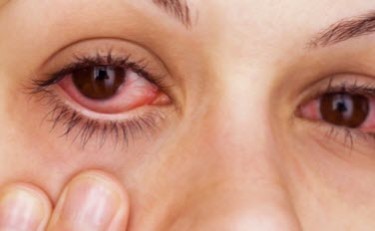
Sure, cannabis has some well-known and common side effects. These can include paranoia, anxiety, dry mouth, red eyes, and feeling high – so much so that you’d be too impaired to drive. These are simply part of the psychoactive effects of cannabis, and science tells us that because each human being has such a unique biochemistry, we will all react to cannabis in different ways.


However, you also have to remember that cannabis is recognized as one of the safest recreational drugs in the world, even despite these minor side effects that people can experience while on it. Magic mushrooms ranks the safest, with cannabis not far behind at second place.


Furthermore, one would have to consume a ridiculously large amount of marijuana within a short time to even overdose. To date, there has not been a single case of a person overdosing from marijuana. Yes, it’s possible to take such a high amount of THC that you would feel unhinged from reality – but that would subside in a few hours.


And yes, people with cardiovascular problems should not take high THC substances. That also goes for people with severe mental health disorders, people who drive, people who have asthma, and a couple more. It’s not for everyone, but it’s certainly helping a significant percentage of the human population lead healthier and better lives.


Conclusion


To end this article, I think that cannabis should indeed have mental health warning labels. As someone who thinks that consumers should be armed with all the information they can when it comes to making a decision on their own well-being, I think that cannabis products particularly those with over 10mg of THC should indeed have warning labels – the same way that we regulate tobacco products.


If that is what it takes to increase access on marijuana and improve awareness as well as education of it, it means going on the right path to more widespread legalization, then it’s certainly for everyone’s best interest.


CANNABIS AND MENTAL HEALTH, READ MORE…

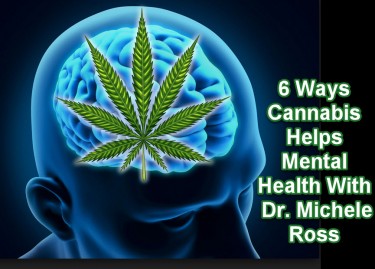
CANNABIS FOR MENTAL HEALTH DR. ROSS

CANNABIS FOR MENTAL HEALTH, A SITDOWN WITH DR. ROSS!

[ad_2]

Source link

Are You Color Blind,Try Magic Mushrooms!

Are You Color Blind,Try Magic Mushrooms!

[ad_1]

colorblind and psilocybin mushrooms

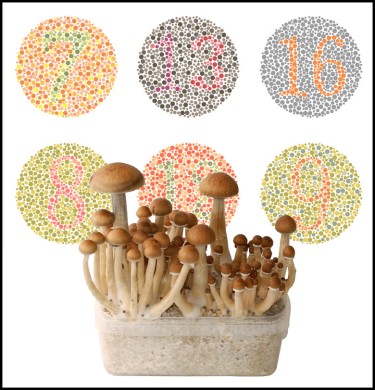
Around 300 million people in the world live with some kind of color vision deficiency.


But being color blind doesn’t mean that one is completely unable to see color. It usually means that people have a difficult time telling the difference between red, green, and yellow. However, there are also some people that can’t see any color at all – just black and white. Unfortunately, being color blind is genetic, and if one is born with it, there’s no known way to manage it.


Currently, no cure or treatment is known for color blindness.


But could psychedelics be the key to treating color vision deficiencies?


A 2021 report that was published in Drug Science, Policy and Law revealed that there are some people who consumed psychedelics recreationally. Afterwards, they were able to see colors they were never able to in the past. There were also some people who reported improvements in vision even if it has been a long time since they consumed psychedelics.


JEC Anthony and other researchers at the University of Cambridge sought out to understand if psychedelics could indeed impact color blindness. They analyzed data from the 2017 Global Drugs Survey, a large-scale study that takes place yearly, asking color-blind people if they noticed any changes in their vision after consuming psychedelics.


Among a cohort of 47 respondents who had a color vision dependency, 23 reported that they indeed experienced improvements with color blindness after psychedelics consumption. Meanwhile, the other half didn’t. But among those who experienced improvements in vision, they said that it occurred 3 days, while some experienced it for as long as years after they took psychedelics.


The researchers attribute these improvements to the ability of psychedelics to activate the 5-HT2A serotonin receptor which is responsible for neural plasticity, helping the brain create new connections.


“Psychedelics may facilitate the experience of an expanded spectrum of colors,” said the researchers. “In the excited psychedelic state, new communication between cortical regions may link new photisms to pre-existing concepts of colors, thus facilitating a new color experience and improving color blindness,” they wrote.


While there are only a few modern studies surrounding the impact of psychedelics on color blindness, it’s interesting to say the least. But one of the earlier studies was conducted in 1963 by Dr. Alex E. Krill, who published a report called, “Effects of a Hallucinogenic Agent in Totally Blind Subjects,” discussing a trial in which 24 completely blind people were given LSD in order to get them to experience hallucinations through the experiment.


“Such phenomena (hallucinations) occurred only in blind subjects who reported prior visual activity…” they wrote.


The Impact of Psychedelics on the Brain and Vision


There is still a lot we don’t know about how drugs alter our vision by its mechanisms within the brain.


For LSD, some research suggests that its psychedelic effects happen when the drug changes communication within the brain at the neuronal level. Researchers found that LSD hooks onto serotonin receptors, which is one of the vital neurotransmitters that we use for communicating. When we experience visual hallucinations on LSD, it’s likely because these receptors are stimulated within the visual cortex, a region in the brain that processes visual cues including color and light.


A study in 2016 analyzed the effects of LSD on the brain. The results, which were published in the Proceedings of the National Academy of Sciences, revealed that when people consumed LSD, their visual cortex showed unusual activity. In fact, they found bigger synchronous activity with other parts of the brain, which they attribute to the visual hallucinations the participants experienced.


Normally, our eyes process information in the visual cortex which is located behind the head. What was interesting was that under the influence of LSD, other parts of the brain worked to process visual information.


According to Dr. Robin Carhart-Harris, from the Imperial College London’s Department of Medicine and the study’s lead author: “We observed brain changes under LSD that suggested our volunteers were ‘seeing with their eyes shut’ – albeit they were seeing things from their imagination rather than from the outside world. We saw that many more areas of the brain than normal were contributing to visual processing under LSD – even though the volunteers’ eyes were closed. Furthermore, the size of this effect correlated with volunteers’ ratings of complex, dreamlike visions.”


There’s Still More We Need To Know


No doubt, we need much more research into psychedelics. If the little studies we have so far shows promising results in its ability to potentially help some people correct their color blindness and vision, that should be foundation enough to conduct more research.


It’s clear how powerful psychedelics are, and we are only barely starting to scratch the surface. The impact of these amazing drugs on the brain, so it’s no wonder that they are commonly referred to as mind-altering substances. One of the findings that consistently keeps showing up is the ability of psychedelics to alter neural pathways and connectivity in the brain, particularly in the prefrontal cortex (responsible for regulating emotions and high level cognitive function) as well as the amygdala (responsible for emotional responses).


Regardless, countless people around the world can benefit from the ways psychedelics can help rewire the brain and even influence the immune system in the brain as a whole. Remarkable evidence keeps showing up year after year. We only hope that more scientists look into a possible solution to help those with color vision dependencies in the same way people are investing into its ability to treat depression, PTSD, and other emotional disorders.


CANNABIS AND YOUR EYES, READ MORE…

RED EYES FROM SMOKING

WHY DO YOU GET RED EYES WHEN SMOKING WEED, READ THIS!

[ad_2]

Source link

Kids in Colorado Don’t Like Weed

Kids in Colorado Don’t Like Weed

[ad_1]

youth cannabis use declines in colorado

Huge Decline In Youth Cannabis Use In Colorado Proves That The Kids Are Alright


Colorado was the first state in the United States to legalize marijuana, by passing Amendment 64 way back in December 2014.


Two years later, state-licensed sales started and they welcomed marijuana tourism with open arms. They have since earned the reputation of being one of the most progressive states in the country, helping to pave the way for a billion-dollar cannabis industry in the country. It would then be easy to assume that even young kids start using cannabis early, right?


Well for those who are worried about youth cannabis use, stating that legalized marijuana makes it all too easy for teens to access the drug, recent statistics prove otherwise.


Data from the Colorado Department of Public Health and Environment (CDHPE) have shown that young people who have admitted to using cannabis had a dramatic decline from 2020 through 2021, says a report from Marijuana Moment. In fact, there has been a 35% drop among teens who report cannabis use in the last 30 days, as well as a 22% decrease in teens that said they can easily access the drug.


“These data are consistent with other surveys showing that marijuana regulation policies can be implemented in a manner that provides access for adults while simultaneously limiting youth access and misuse,” says Paul Armetano, NORML Deputy Director. “These findings ought to reassure lawmakers and others that cannabis access for adults can be regulated in ways that do not inadvertently impact young people’s habits.”


In addition, a survey conducted by researchers from the Colorado School of Public Health at the University of Colorado Anschutz Medical Campus shared similar results: a 35% drop among teens using marijuana. The poll, called the Healthy Kids Colorado Survey, reflected decreases in actual use, perceived access, and driving while under the influence.


“I’m delighted to see that youth usage numbers are going down,” says Truman Bradley, the Marijuana Industry Group’s executive director. “Thirteen point three percent of youth admitted to using cannabis in the last 30 days, which is a decrease from 20.6% in the prior survey. That’s a 35% drop. That is a huge number,” he said.


There are numerous studies that point to it, and we can’t deny the facts.


Another larger study from 2019, which was published in JAMA Pediatrics, involved surveying over 1.4 million high school students. Researchers analyzed data from the Youth Risk Behavior Survey from 1993 and 2017, then compared cannabis consumption rates across all states with consumption rates among teens in states with legal marijuana policies in place – either for recreational or legal purposes.


They found that legalization once again indeed helped to curb cannabis consumption among teenagers.


“The general takeaway from our research is that there is no evidence that legalization of marijuana for medical or recreational purposes has led to increased teen use,” explains D. Mark Anderson, PhD, lead author and associate professor in the Department of Agricultural Economics and Economics at Montana State University. “This is now one of a handful of studies that all reach the conclusion of no effect on teen marijuana consumption,” he adds.


Anderson goes on to explain that while the researchers were not able to identify the exact reasons why cannabis use has gone down, they pointed to previous studies which suggest doing so makes it harder for teenagers to access marijuana from a dispensary following regulation compared to getting it from the black market before it was legalized.


Why Cannabis Regulation Is Key


Despite what many people think, if you really aren’t doing the research, it’s far too easy to say that legalizing marijuana will become a major public health problem. The truth is that, when we don’t make marijuana legal or incorrectly regulate it, kids can easily access them through the black market.


Sure, there is a risk in regulating – but no regulation makes the risk much worse. Even if states have different regulations and public policy, it’s up to the state governments to implement the right programs to increase protection for the youth while ensuring that patients as well as adult recreational users can still get what they need.


There are also studies showing that even recreational laws have been linked with a decline in teen use.


Clearly, regulation leads to a reduction in easy supply since dealers have been replaced by legitimate dispensaries which would require identification and proof of age in order to buy. For people to sell to minors would translate to a serious crime, making it a much riskier act. Besides, when states regulate marijuana, they do this to enable adults to acquire it legally while preventing minors from accessing it.


In addition, there’s also the possibility that more parents open up about drug use talks with their children when the place they reside in starts legalizing drugs. Kids end up becoming more aware of the harms of early use, and it also can lead to more supervision among children and parents. These discussions may not have been in place when the drug isn’t regulated since parents don’t see an immediate need to do so urgently.


When teenagers enter adulthood and can legally access marijuana, it’s much safer for them compared to alcohol and other illicit substances. Cannabis legalization has been linked with a decline in drunk driving, opioid addiction rates, violent crime, and much more – all of which show that it could indeed benefit society as a whole.


Conclusion


The studies all point to the same facts: regulating marijuana will help us make sure that the kids are alright.


MORE FAKE CANNABIS CLAIMS, READ THIS…

TEEN SUICIDE RATES MARIJUANA USE

DEA CLAIMS TEEN SUICIDE RATES GO UP WITH CANNABIS, NO DATA SUPPORTS THIS!

[ad_2]

Source link

Lit Summer Weekend Recipes – Cannabis-Infused BBQ Sauce, Buffalo Wings, and More!

Lit Summer Weekend Recipes – Cannabis-Infused BBQ Sauce, Buffalo Wings, and More!

[ad_1]

cannabis infused bbq recipes

Lit Summer Weekend Recipes: Infused Barbecue Sauce, Buffalo Wings, And More!


Barbecue and picnic season is upon us.

With the warm sun and bright summer days, it’s the perfect time to bust out the barbecue grill. Call your nearest and dearest over to indulge in delicious smoked meats, barbecue, chicken wings, and more party favorites as you sip infused cocktails. Elevate your weekend experience by offering infused recipes that will knock your guests’ socks off.


Here are some delicious infused recipes to show off to your guests this weekend.


But before you get started, check out this link to learn more about decarboxylation your weed properly for infusions.


Barbecue Sauce


Barbecue sauce comes in so many different variations. They even come in different colors and textures. Here, we give you a recipe for one that’s closer to its Southern original which is also extremely easy to make. Of course, the best use for this sauce is for grilling meats but you can also use it to slather on quesadillas, make barbecue cauliflower bites, pulled pork sandwiches, and so much more.


Ingredients:

  • ¼ cup cannabis oil

  • 1 cup water

  • 2 cups ketchup

  • 5 tbsp. sugar

  • 5 tbsp. light brown sugar

  • ½ cup apple cider vinegar

  • 1 tbsp. Worcestershire sauce

  • ½ tbsp ground mustard powder

  • ½ tbsp onion powder

  • ½ tbsp ground black pepper


Process:


  1. Mix all the ingredients into a saucepan.

  2. Place the heat on low, and gently simmer it for 15-20 minutes.

  3. Pour into a bowl and use as a dip or marinade.


Buffalo Wings


Deep fried or air fried buffalo wings are always a crowd pleaser among both kids and adults. These classic American appetizers have been around for a long time but they will always be a classic. Heck, even if they’re appetizers, nothing’s stopping anyone from making an entire meal out of buffalo wings!


Ingredients:


Process:


  1. If you will be deep frying, heat the oil in a large sauce pan or deep fryer until it reaches 190C.

  2. Add all the ingredients except the wings, cannabutter, regular butter, hot sauce and garlic powder, together in a large bowl and use a spatula or your hands to combine everything well.

  3. Use either tongs or your hands to dip the wings in the mixture for a light coating. Leave it on a wire rack and allow it to rest for 5 minutes.

  4. Dip the wings once again into the oil for around 10 minutes or once it reaches a golden brown color. You may want to fry the wings in batches to avoid crowding the fryer which will reduce chances of evenly cooking the meat.

  5. In a separate skillet, melt the cannabutter and the regular butter on low heat. Add in the hot sauce and garlic powder as well as a sprinkling of more black pepper to taste. Mix until well combined, then add the chicken wings to thoroughly coat in this sauce.

  6. Serve immediately.


Note: If you intend to air fry the chicken wings, follow the same process but without dipping the chicken in oil – place it in the air fryer at 180C instead.


Deviled Eggs


A party isn’t complete without deviled eggs, a popular finger food that’s oozing with decadence. But it’s also extremely easy to make even if it’s lit with a cannabis infusion! Deviled eggs are also perfect for game day or when you have guests arriving at home last-minute – they’re quick AND delightful!


Ingredients:


  • 10 large eggs

  • ½ cup mayonnaise

  • 1 pinch of baking soda

  • 1 tbsp Dijon mustard

  • 1 ½ tsp cannabis oil

  • 1/4 tsp ground black pepper

  • 2 anchovy fillets, minced

  • Horseradish

  • Smoked paprika to sprinkle


Process:


  1. Put cold water into a large pot that can fill all the eggs.

  2. Add the eggs then the baking soda and allow the water to come to a boil. Let it boil for 1 minute then turn off the heat.

  3. Cover the pot and allow it to sit for 8 minutes.

  4. Place the eggs into a bowl filled with ice for 2-4 minutes and proceed to peeling them.

  5. Cut the eggs into half, lengthwise.

  6. Put the yolks into a separate bowl while the whites are on a serving tray.

  7. In the bowl with yolks, add in the mayonnaise, mustard, cannabis oil, pepper, and anchovies. Mix until well incorporated. Taste and season as needed.

  8. Fill up a pastry bag or a big Ziplock bag, with the corner trimmed off. Pipe the filling into the cooked egg whites.

  9. Place a dollop of horseradish then sprinkle paprika.


Serve and enjoy!


Hummus


Another classic party favorite: hummus! This Middle Eastern dish has worn hearts all over the globe for its deliciousness and sheer versatility. Now it’s made even better with a cannabis infusion!


Ingredients:


  • ¼ cup cannabis infused olive oil

  • ¼ cup tahini

  • ¼ cup lemon juice

  • 2 garlic cloves

  • 1 15-ounce can of chickpeas, drained then rinsed

  • 2 tbsp water

  • ½ cup ground cumin

  • Salt and pepper


Process:


  1. Blend the tahini and lemon juice in a food processor.

  2. Toss in the chickpeas, cannabis oil, cumin, garlic, and water. Blend until it reaches a smooth consistency. Add water if needed.

  3. Taste and season as needed.


Serve the hummus with fresh vegetables (carrots, cucumbers), chips, or pita bread.


What are your favorite cannabis infused party foods?


MORE ON CANNABIS-INFUSED BBQ, READ THIS…

CANANBIS BBQ SAUCE RECIPE

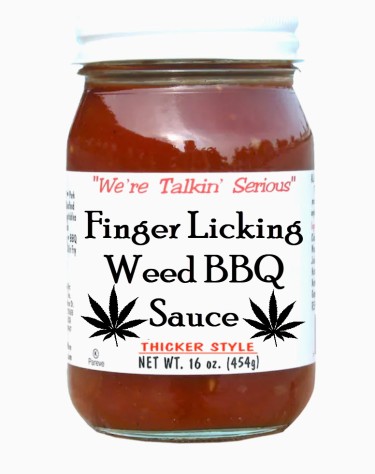
HOW TO MAKE FINGER LICKING CANNABIS BBQ SAUCE AT HOME!

[ad_2]

Source link

The Great Exodus from Organized Religion

The Great Exodus from Organized Religion

[ad_1]

cannabis for leaving organized religion

We are seeing a shift occur in real time and most people are too fixated on the latest social craze to know what’s going on. To be fair, to see societal shifts you do need to exercise a degree of awareness that most do not possess.


For those who have been paying attention – the world is different now.


There’s a definite difference in the tone and expression baselines reality than from twenty or thirty years ago. The 1990s, 80’s and before…all had a marked “era” to them. However, those antiquated norms began melting away over the past 10-15 years, right about the same time when Social Media was introduced to society in mass.


The Mayan Calendar ended on 2012 (for the previous great cosmic year), meaning that the new calendar is now in effect. Within astrological speak, “we’ve moved into the house of Aquarius” and in terms of Hindi myth, “We’re in the Age of Kali” – Christians call it, “the end of days”.


All of these different myths eluded to a time where there would be “wars and rumors of wars”, and where a new age would take its place.


In 2012, nothing spectacular happened. The world did not come to a crashing end, we did not see the end of days, the Armageddon did not come.


However, perhaps we were missing the point. We humans like to hyper-fantasize these cosmological events and create epic showdowns between two visible forces battling it out to see who wins. The old vs the new, the young vs the old…a dualistic state of reality.


Yet when you look at nature, change happens gradually, almost invisible to linear beings incapable of watching their own lives objectively. How do sunny skies become raging storms? They do so drop by drop, evaporating over time, coming together and forming gigantic floating sky lakes that are then pushed by the wind and when coming into contact with other clouds – thunder down rain with trembling might.


We only begin to pay attention when it is undeniable that “there is a storm coming”, however, we are oblivious to all of the other elements in the puzzle.


Similarly, we are now undergoing a paramount shift in society and we will never be the same again. What this future may hold is still anyone’s guess, but there is one thing that we can definitely note – cannabis has been integrated into mainstream society.


This might be due to the fact that there has also been a great exodus from organized religion. According to some Pew Research, there has been a significant decline in Christianity in the US over the past decade.


In Pew Research Center telephone surveys conducted in 2018 and 2019, 65% of American adults describe themselves as Christians when asked about their religion, down 12 percentage points over the past decade. Meanwhile, the religiously unaffiliated share of the population, consisting of people who describe their religious identity as atheist, agnostic or “nothing in particular,” now stands at 26%, up from 17% in 2009. – Source


The fact that people stop identifying with mainstream religion doesn’t negate their need for spiritual fulfillment. This is where substances like cannabis, psilocybin, DMT, LSD, and other psychedelics can help supplement the spiritual sustenance they got from their previous affiliations.


This isn’t saying that people will abuse these substances, but rather would rely on the intense psychedelia associated with some of the aforementioned “drugs” as a genuine subjective experience of spirituality in where they would be able to deposit much of their social anxiety and ascribe meaning to their existence.


After all, religion is simply a mechanism of engaging with society with a centralized authority running the show. Plant medicines and psychedelics on the other hand is another avenue to “experience divinity” without any centralized figures telling you what is right or wrong.


It’s like Open Source Spirituality or “Direct Interfacing Spirituality”.


As more people abandon their traditional representation of spirituality and embrace the “unknowingness” of it all – these “alternative approaches to wellness” are gaining mainstream attention. People are treating their depression with it, others curing their PTSD, and others utilizing it as a means of interacting with a spark of the “divine” – and the science is right there to document it all.


Yet while these psychedelics play a significant role in major shifts within the identity of a person and their interpretation of the world around them – cannabis has a far more subtle effect that will entrench itself within culture in many forms – one of them being a supplement for organized religion.


The Church of Cannabis


While psilocybin, LSD, MDMA, DMT and so forth can provide a person with significant transformative experiences in a short period of time – cannabis takes a more nuanced approach to wellness. Cannabis is something that people can consume daily without too much interruption of their daily activities.


In fact, most regular cannabis consumers are completely functional and utilize cannabis at specific times for specific purposes. Whether they are using it to go to sleep and unplug from a long day at the office, or to mitigate their anxiety or pain in order to be productive. Or simply for those who want to feel a bit of euphoria and enjoy themselves for the hell of it.


Most people are capable of sustaining a healthy cannabis habit and remain productive. Yet, cannabis also makes people want to try the crazies things like, going on hikes or learning a new sport. For some reason, when people begin to smoke cannabis – they begin to embark on new activities.

Potentially it’s about the self-reflective nature of cannabis. Say what you will about weed, but when you smoke enough weed you can turn your awareness on yourself and objectively see and say things about yourself you’d commonly like to ignore.


It’s as if the ego took a shot of the “Fuck-its!” and won’t take offense if you call it out on its bullshit.


It is in this capacity where cannabis can become a bridge that connects the “none religious” people in a way that organized religion does. This is one thing that organized religion excels at – creating community. This is also a fundamental problem with “open-source spirituality” in that they don’t have a “gathering protocol”.


In other words, people who smoke weed don’t come together at the community center every Saturday to smoke weed and listen to music a bit and then listen to some stoned dude talking about life stuff while others listen.


However, cannabis users “go out” and try new things. They take up hiking and meet other hikers (often who also are stoners). They take up mountain biking, surfing, cooking classes, etc.


This allows the individual to fill the void of community that is left when they abandon their traditional spiritual roots in search for something more.  However, while this community is present, there will still be a sense of “lack” in their lives because even though cannabis can help an individual gain some perspective in their life – it is not a substitute for divinity.


Psychedelics and plant medicines are amazing tools that allows us to experience temporary moments of blissfulness and deep understanding. It warps out perceptive filters in such a way that we get to see a bit more than what we typically are capable of processing under normal conditions.


Yet these are still merely objects within our scopes of focus and while they may elude to the divine, they themselves are not the divine.


This is the second purpose of organized religion – a means of engaging with the divine.


How does one interact with the divine?


While cannabis is not a supplement for the divine, it can be utilized as a sacrament to it. The truth of the matter is that organized religion is nothing more than people telling other people “what the correct way” of believing in an undefinable being that supersedes our understanding.


What religion has in its favor is a well-organized approach on how you can submit yourself to a “code” in order to access the divine under certain conditions. For example, going to church on Sunday and worshipping with your community invokes the divine. This is true for all religions. If you go to a place where earnest people are calling to God (whoever that may be to them), you’ll witness an immersion of “something beyond” into the crowd.


Perhaps it is a type of mass psychosis, but for anyone who has truly experienced the touch of the divine, irrespective of their faith – they know it’s “something greater than them”.


Conversely, open-source spirituality doesn’t have a “text book” you can follow to engage with the divine. Rather, there are tools available and you construct your own mechanics of interaction – “Your Own Personal Jesus!”


Cannabis helps set the stage, it can help grease the individual’s mind and open them up to experiences of divine. But it would be a mistake to think that it is cannabis itself that is providing a source to the divine. Rather, it acts as a means for the ego to let go of trying to control the moment, and shuts down the inner-critic – allowing the participant to fully engage with their moment of divinity.


The question is, if cannabis isn’t the source of divinity, then how does one sustain a deep spiritual practice?


The good news is that the divine manifests itself when someone earnestly seeks it, irrespective of their faith. This technically means that if someone can believe earnestly enough in a particular model of engagement – they will be able to witness the divine express itself through it.


For example, if you believe that planetary alignment plays a role in what you can and cannot do in this life, the divine will utilize this system to communicate and engage with you. If you believe that the divine resides in nature and go to nature to be in the presence of the divine – it will be there!


This is the underlying lesson of all of these plant medicines – the divine is within, not without. However, it is through the meaning you ascribe to your actions that you invoke the divine. The rituals you engage with generate the results you live with.


Many people are tapping into ancient practices and modifying it to their lifestyles. Things like Yoga, Breathwork, Meditation, Magick, and other practices are all suitable systems for engaging with the divine.


A particular current of magick entitled “Chaos Magick” is essentially a paradigm where any element of any belief can be incorporated to construct your own system of engaging with the world. Your own “Psychosm”.


Within these practices, cannabis may be able to play an important role.


The role of cannabis in organized religion


Not many people know this, but cannabis was part of the traditional Jewish tradition. It’s even mentioned in the Bible & is a critical element in the making of the Holy Anointing oils.  These oils were doused with cannabis, which then would be poured all over a prophet or king. Jesus was doused with pints of cannabis, which most certainly got him some degree of stoned.


The burning bush that Moses so famously spoke too is also theorized to be an Acacia bush according to some which contains trace amounts of DMT. There is also a theory that the Mana in the desert were actually mushrooms.


The point being, “drugs” have long played a role in the formation of spiritual practices. There is no reason why cannabis would not play a similar role as the entire human race reexamines their value systems.


Similarly, more people are going to look to substances like Ayahuasca, Peyote, Magic Mushrooms, LSD and more to help them redefine their spirituality according to their own preferences.  For a while, this will spark a rapid evolution of belief systems some of them that may be a little “crazy”, but over time there should be an emergence of new currents of beliefs.


These new “religions” will either create new or modify old systems and shape it to suit the needs of the modern human. In all likeliness, you’ll see some sort of “techno-oriented religion” spark up in the future. Transhumanism is already a thing and is growing in popularity.


The old religions will become myth, and the new religions will become central in the formation and interaction of society.


Thus, as we see cannabis become legalized all over the world – this is merely the precursor to the major shift that will follow.


Psychedelics will become more mainstream and eventually enough people will abandon their old religions to adopt more dynamic means of interacting with their spirituality. Cannabis will play a major part in all of this.


The sticky bottom-line


Whether you like it or not, we’re currently in a major paradigm shift. The pandemic has accelerated a lot of the change, but the real fundamental things will happen once the institutions of old are weakened enough due to their inability to adapt fast enough with newer means of engagement.


It will probably take two or three generations for mainstream religion to take a more passive seat and would be considered similar to the “old wives tales” of today (in reference to antiquated beliefs of the previous generations).


Right now the establishment is still desperately trying to hold things together, the technocrats betting on a dystopian future – but underneath it all is a bubbling new paradigm about to wreak havoc on the world.


The great disruption is coming…so pack a bowl and let’s watch the madness unfurl.


RELIGION AND WEED, READ MORE…

IMPACT OF RELIGION ON CANNABIS LEGALIZATION

THE IMPACT OF RELIGION ON CANNABIS LEGALIZATION?

[ad_2]

Source link

Wee-Delivery Chatbox
!

Wee-Delivery Assistant

How can I help you?

Hi there! 👋 Welcome to Wee-Delivery. How can I assist you today?
Call us: 888-422-9658
Hours: Mon-Fri 9am-1pm, closed 2pm-6pm, then open until 11pm. Saturday 9am-11pm, Sunday by appointment.
Delivery minimum
Are you open now?
Service areas
Verification process
Payment methods
After hours
How to order
Call 888-422-9658