Laura Ingraham Blames Weed For Gun Violence

[ad_1]

Fearmongering about cannabis reached new levels on cable news this past week.

Last Tuesday, in a segment on “The Ingraham Angle” on Fox News, political commentator Laura Ingraham blamed “pot psychosis” due to widespread legalization for the rise in mass shooting incidents. The Fox News pundit doubled down on her pot psychosis theory the very next evening.

While most people disagree whether gun violence is a gun control issue or a mental health issue—Ingraham blames pot instead.

Ingraham welcomed Russell Kamer, M.D., medical director of Partners in Safety, a drug testing organization, to question why people aren’t “talking more about the pot psychosis-violent behavior connection.” You can watch a clip of the entire segment here.

“What we find in studies [is that] it’s very clear that the use of the high potency marijuana is strongly associated with the development of psychosis,” Dr. Kamer said.

“My colleagues in Colorado,” Kamer continued, “are sounding the alarm because that was one of the first states to legalize. It’s practically a daily occurrence that kids come into the emergency rooms in florid, cannabis-induced psychosis.”

Ingraham dug deeper into her theory.

“This is something that the medical community is well aware of. Yet, you get the sense that the billions of dollars on the line are more important than our kids,” Ingraham said. “And what’s happening especially to young men in the United States, who are frequent users of this high-potency THC that’s now in marijuana products sold legally in dispensaries across the United States. I mean, this at the very least needs a serious national conversation.”

The Daily Beast reports that Ingraham claimed that it was initially reported that the 18-year-old shooter who killed 19 children and two adults at Robb Elementary School in Texas “was a user” but that The New York Times “mysteriously” removed that tidbit from their reporting.

“Reefer Madness” began trending on Twitter the very same night following the episode. “The 1930s called; they want their reefer madness propaganda back,” one person tweeted. “I didn’t think anyone would honestly circle around to that bulls**** ever again….” another person tweeted. “But it is funny to watch someone try.”

Ingraham’s angle is based on the idea that cannabis increases violent behavior.

But The New York Times reports that cannabis use has been demonstrated to make people less, not more, violent. Some of these ideas can be traced to a single source. Fellow Fox News host Tucker Carlson ran a segment inspired by a New York Post op-ed that reported about an anti-pot lobby group’s list of mass shooters it claimed were avid cannabis consumers. But the claim about the connection to violence was dismissed by Politifact. Carlson frequently hosts known anti-pot author Alex Berenson to demystify the “dangers” of weed, as well as vaccines and other topics.

The gun-weed “connection” has been made before. Sue Klebold, mother of Dylan Klebold, one of the two Columbine shooters, mentioned how when cops found a tiny bit of weed in the shooter’s brother’s room, it became a spectacle. Byron Klebold, who wasn’t involved in any shootings, just the brother of a shooter, was forced to undergo counseling for his weed “addiction.” Marilyn Manson and others were also frequently blamed for Columbine.

The very next night Ingraham returned to question whether weed is to blame for the “horrific carnage” playing out in schools and public spaces across America.

“Considering the horrific carnage here from other tragedies we already know about where high potency cannabis may have played a role, it’s important that Americans have more answers. We deserve to know the truth about this multi-billion-dollar and growing industry, how it’s affecting our young people, our working age population, and even our military readiness.”

Instead of watching highly biased shows on cable news, try reading peer-reviewed studies about the actual danger and non-danger of cannabis.


[ad_2]

Source link

Who Buys the Most Weed in America? Gen Z Passes the Baby Boomers for Biggest Cannabis Customers!

Who Buys the Most Weed in America? Gen Z Passes the Baby Boomers for Biggest Cannabis Customers!

[ad_1]

gen z buys weed

While a larger percentage of Generation Z aren’t old enough to purchase cannabis, the small percentage can have proven to be huge consumers. And now with 420 becoming one of the biggest ceremonies across the United States, cannabis consumption and sales have increased with Gen Z’s huge consumers.


Over the years, Gen Z consumption has increased especially as cannabis legalization across the United States continues to gain ground. Over the last 5 years, Gen Z cannabis consumption has increased significantly with data from Headset, an analytics company backing up the claims.


Gen Z Cannabis Consumption in 2021

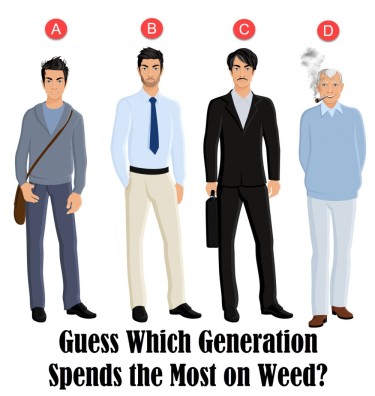
According to data provided by Headset, an analytics company, the first half of 2021 saw Gen Z overtake Baby Boomers in terms of overall marijuana sales for the very first time across four legal states. Looking at the current trend, Cooper Ashley, a senior analyst at Headset affirmed that Gen Z in the next 10 to 15 years will become the largest generation in terms of overall cannabis sales.


Only a small percentage of Gen Z, roughly 9 to 24 years old, are eligible to legally buy cannabis. Even that, the age group now accounts for 12.7% of cannabis sales in Colorado, California, Washington, and Nevada. This data collected in the first of 2021 shows an increase of 4% compared to 2020.


In the same year, Baby boomers accounted for 12.1% of the overall sale which was a decrease from 13.9% in 2021. This means Gen Z for the very first time surpassed Baby Boomers in terms of overall cannabis sales. Even the almighty millennials lost market shares to Gen Z as they account for 51.8% of cannabis sales in 2021. This represents a decrease of 0.2% compared to 2020.


Now, as it currently stands,  store sales of cannabis have increased by 148% in 2022 according to the data provided by Headset. And what age group is buying all the cannabis products? Gen Z!, who is now legally old enough to buy cannabis.


A shifting demographic creates a fresh marketplace

As the cannabis industry continues to evolve and grow, so does its target market, from one generation to the next. As Gen Z comes of age, they are rapidly accepting cannabis, making new trends while the industry continues to change to meet demands.To this end, Headset decided to look into Gen Z and how they purchased cannabis on 420 this year. The analytic company looked into the purchases from basket sizes to product preferences. According to the Headset report, Gen Z cannabis consumers are the most involved, expanding their average daily spending on cannabis purchases.


While Gen Z Women purchase 25% more cannabis products, Gen Z men purchase 35% more compared to the previous week.


Gen Z’s Product Preference

On 420, beverages had the highest increase in sales, accounting for a 5 times increase compared to a usual day. Pre-rolls and edibles also showed great numbers on the said day. If this data directly translates to market direction, then vape pens are getting outdated.


Or it could just translate to Gen Z customers who were looking to buy cannabis supplies for the celebratory parties instead of their usual supply. Nonetheless, this data available could help retailers draw up the group as repeat customers. Maybe now is the right time to stock up on single-served items and more edibles as Gen Z continues to age into cannabis use for recreational purposes.


Total Cannabis sales among Gen Z

Total cannabis sales among Gen Z surged by 127% with a total of $370 million in 2018 to $850 million in 2020. When compared to that of millennials, that is about three times more than cannabis sales among millennials. According to the data provided, millennials recorded a surge in cannabis sales of 46% seeing an increase from $3 billion in 2019 to over $4 billion in 2020.


Ashley credited Gen Z’s remarkable growth to the fact that not all in the age group are eligible to purchase cannabis. Therefore, as more young adults in Gen Z come of age (21 years), sales will continue to increase. Ashley affirmed that with more Gen Z coming of age every single day, legal cannabis sales for the age group will continue to increase. With this trend, Gen Z will eventually become one of the most vital demographic groups in the industry.


The report also indicated that the increase in cannabis sales by age group also seems to be declining with older generations. Sales of cannabis among Gen X increased by 29% from $1.6 billion to 2 billion from 2019 to 2020. On the other hand, sales of cannabis among Baby boomers surged by 5% increasing from $970 million to about $1 billion from 2019 to 2020.


The Silent Generation (aged 75 to 95 years of age) was the only group that witnessed a massive decline in cannabis sales. The age group witnesses a decline of 18% from $50 million to about $40 million. This decline in sales among older generations could be a result of several factors, especially during the Covid pandemic. During this period, lots of consumers stayed at home to curb viral exposure.


Consumption Habits of Gen Z

The Headset report indicated that cannabis may have become an inherent culture for Gen Z compared to older generations who may see cannabis as a splurge. Meanwhile, as cannabis sales among Gen Z increase, interest in alcohol among young adults is declining.


It is said that this consumption habit among Gen Z could be a result of the impact of their distinct qualities. One thing about Gen Z is that they were born in an era when cannabis legalization took off. Medical use of cannabis was legalized in California in 1996. Oregon, Alaska, and Washington took the same step in 1998. Today, 18 states have legalized cannabis for recreational use, and 36 legalized states for medical cannabis use.


With so much cannabis legalization happening through Gen Z’s era, cannabis perception has changed and the generation seems to be more accepting of it. Now Gen Z sees cannabis as equal to alcohol and just another option of an intoxicating substance. 


Conclusion

Certainly, it may be too early to make conclusions on Gen Z’s product preferences and cannabis sales. However, if the present growth trend proves to be a solid pointer towards the market direction, Gen Z will be a vital consumer section for the cannabis industry shortly.


GENERATIONAL WEED, READ MORE…

GENERATIONS SPENDING ON CANNABIS

WHICH GENERATION SPENDS THE MOST ON WEED, READ THIS!

[ad_2]

Source link

Illinois judge gives 185 social equity cannabis stores the go-ahead, finally

Illinois judge gives 185 social equity cannabis stores the go-ahead, finally

[ad_1]

Illinois cannabis consumers may have noticed that social equity retailers were terribly hard to find.

The Illinois cannabis market is set to expand with the release of 185 new retail licenses for social equity applicants. On Friday, May 27, Cook County Circuit Judge Michael Mullen ended a court-ordered stay on licenses that had stalled the opening of all new stores for nearly a year.

The earlier stay, ordered last August by Cook County Judge Moshe Jacobius, put social equity licenses on ice while other Illinois applicants argued over their eligibility for social equity status in court. The stay allowed 55 non-social equity cannabis stores to open for business, while social equity applicants were forced to survive without any revenue for the past 10 months.

Related

New ‘Seeds of Change’ report rates states on cannabis equity, finds most lacking

The social equity slowdown in Illinois cannabis retail

Illinois started out with a bang in the adult-use market, bringing in millions in sales from both local residents and visitors from neighboring states since the market opened on January 1.

When the adult-use program began, state officials had earlier announced an ambitious slate of goals for integrating social equity into the Illinois cannabis industry – and have struggled toward those goals with varying degrees of success.

Governor J.B. Pritzker delivered on his promise to  introduce more cannabis justice into the state, by expunging nearly half a million cannabis convictions. And licenses for processing and growing have rolled out in a smooth and inclusive fashion. In fact, of the 40 conditional licensees awarded for craft growers in Illinois, 80% of owners identify as nonwhite, and 88% qualified as social equity applicants. Illinois also set up a $30 million fund to help social equity licensees.

But that success did not carry over into the retail licensing program.

Related

How cannabiz owners can shape social equity

How social equity retail licenses will (and have) shaped the Illinois market

With the addition of 185 new retail businesses, the Illinois market is set to expand by more than 160%. That’s expected to open up new market dynamics.

Illinois cannabis consumers will have more locations to shop, along with the option for a more meaningful shopping experience knowing that they are supporting a social equity retailer. This could translate to their cannabis spending. For example, this report shows that socially responsible consumer spending increased by 25% in 2021 – highlighting the unique patterns of a more conscious consumer.

Socially conscious cannabis consumers in Illinois have so far been denied the opportunity to support social equity retailers with their money. Once this new wave of retail licensees start opening stores, customers will finally have the opportunity to pivot their spending if they so choose.

What we don’t know is when the 185 social equity licensees will get the final all-clear. While the stay is currently lifted, there’s no guarantee that other businesses that didn’t qualify for the state’s equity program won’t bring further lawsuits.

Many prospective business owners—both equity and non-equity applicants—still have a sour taste in their mouths over the way the state initially evaluated their applications. Their criticisms brought the Illinois Department of Financial and Professional Regulation under scrutiny, and they demanded corrective action.

In response, the state has created three more licensing lotteries planned for summer 2022 to make up for their failed licensing launch.

Will Illinois social equity retailers finally get their time to shine?

Licensees who were able to ride out the wait are overdue for their piece of the state’s multi-million dollar legal cannabis industry. In the meantime, the budding business owners who didn’t have the hundreds of thousands of dollars it took to maintain their inactive storefronts are the biggest victims of the social equity slowdown in Illinois.

The longer it takes to sort it out, the longer Illinois cannabis consumers who care about supporting minority-owned cannabis businesses may stay out of the legal market altogether.

Janessa Bailey's Bio Image

Janessa Bailey

Janessa was born and raised in the Midwest, and serves as Leafly’s current culture editor. She has a background in content, activism, and African-American Studies.

Janessa is the creator of Lumen and Seeds of Change.

View Janessa Bailey’s articles

[ad_2]

Source link

British Columbia Plans 3-Year Decriminalization Test

[ad_1]

British Columbia will decriminalize personal possession of small amounts of drugs for three years in an attempt to address the province’s crisis of overdose deaths. The Canadian federal government announced on Wednesday that it had approved a request from provincial officials to enact the plan, which will decriminalize possession of street drugs including heroin, fentanyl, cocaine, and methamphetamine.

“Eliminating criminal penalties for those carrying small amounts of illicit drugs for personal use will reduce stigma and harm and provide another tool for British Columbia to end the overdose crisis,” federal Minister of Mental Health and Addictions Carolyn Bennett said in a statement quoted by Reuters.

In November, British Columbia officials requested an exemption from enforcing the federal Controlled Drugs and Substances Act for a period of three years. Under the plan, personal possession of up to a cumulative total of 2.5 grams of opioids, cocaine, methamphetamine, and MDMA will not result in an arrest, citation, or confiscation of the drugs. The limited drug decriminalization plan, however, will not apply at airports, schools and to members of the Canadian military.

“This is not legalization,” Bennett told reporters at a news conference in Vancouver. “We have not taken this decision lightly.”

Under the plan, possession of larger quantities of the drugs and the sale or trafficking will remain illegal. The limited decriminalization test program will begin on January 31, 2023, and continue until January 31, 2026.

British Columbia Overdose Deaths Soaring

British Columbia, which has been especially hard hit by the nationwide opioid crisis, declared a public health crisis in 2016 due to the spike in overdose deaths. The number of deaths has continued to climb since then, with a record 2,236 fatal overdoses reported last year in the province. According to provincial officials, drug overdoses are the leading cause of death among people aged 19 to 39.

Public officials hope that the decriminalization test plan will help reduce the stigma surrounding drug use and addiction and make it easier for people with substance misuse disorders to seek treatment.

“Substance use is a public health issue, not a criminal one,” said British Columbia’s Minister of Mental Health and Addictions Sheila Malcolmson, adding that the exemption will help the officials address substance abuse issues in the province.

In the request to the federal government, British Columbia officials wrote that criminalizing drug use disproportionately impacts marginalized communities and fails to treat substance use disorders as a health issue. Federal drug policies, the province wrote, are failing their goals and making drug overdoses more likely.

“Criminalization and stigma lead many to hide their use from family and friends and to avoid seeking treatment, thereby creating situations where the risk of drug poisoning death is elevated,” provincial officials wrote in the request for the exemption.

The 2.5-gram limit set by the federal government is smaller than the maximum of 4.5 grams requested by British Columbia officials. In the request for the exemption submitted to Health Canada, the province wrote that limits that are too low have been ineffective and “diminish progress” on the goals of drug decriminalization.

“The evidence that we have across the country and [from] law enforcement … has been that 85 percent of the drugs that have been confiscated have been under 2 grams,” Bennett said to explain the lower limit, “and so we are moving with that.”

Public health advocates, local and provincial government officials and even some chiefs of police have asked Canadian Prime Minister Justin Trudeau to decriminalize possession of small quantities of drugs for personal use. In 2018, Canada legalized cannabis nationwide, a drug policy change that was supported by Trudeau.

Vancouver Mayor Kennedy Stewart is among the public officials who have championed efforts to decriminalize drugs. Each Monday, he gets an email reporting the number of drug overdoses and resulting deaths in the city. One week, the death of one of his family members was included in the report’s grim statistics. On Monday, the mayor learned that the decriminalization plan for British Columbia had been approved.

“I can tell you I felt like crying, and I still feel like crying,” he told the Washington Post. “This is a big, big thing.”

“It marks a fundamental rethinking of drug policy that favors health care over handcuffs,” Stewart added.

Bennet said that British Columbia’s plan to decriminalize personal possession of small amounts of drugs will be monitored as it progresses. If it succeeds, it could be a model for drug policy change nationwide.

“This time-limited exemption is the first of its kind in Canada,” she said. “Real-time adjustments will be made upon receiving analysis of any data that indicates a need to change.”

[ad_2]

Source link

The Battle for Cannabis Strain Naming Rights

The Battle for Cannabis Strain Naming Rights

[ad_1]

cannabis strain name battles

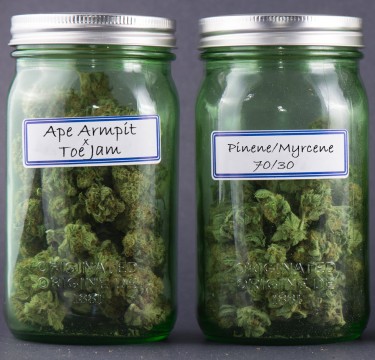
We are presently in the wild west era of the semi-legal and fully legal marijuana market. And as it stands, the height of creativity, cleverness, and chaos of cannabis culture is experienced the most on the terrain of strain names. However, as cannabis becomes more popular, there’s now the need to find a modern system of strain naming.


Certainly, we all have our favorite cannabis strain – the legendary Northern Lights, classic Sour Diesel, and the graceful White Widow. But the question remains how do people come about these names. To properly answer the question, there’s the need to go back in time to where it all began – the origin of strain naming. With that, we will be able to see how the practice evolved.


HISTORY OF STRAIN NAMING

Strain naming began in the 1960s when cannabis growers moved across the globe in search of cannabis with quality genetics in the bid to meet increasing demands. At that time, the strains were primarily named based on their country of origin. Early strains had names like Durban Poison, Columbia Gold, Panama Red, Afghan Kush, and so on.


As time went by, various cannabis strains were bred to enhance yield, pest resistance, flavor, and effects. Cannabis growers then creatively named their descendants: some for their effects like Blue Mystic, Blue Dream, and Painkiller XL. Some also for their flavors such as Skunk, Blueberry, and Sour Diesel, and others were named after weed icons, celebrities, and fictional characters like Bruce Banner and Jack Herer.


When new strains are bred, the names are often coined to reflect the parent’s name. For instance, the White Berry is a progeny of White Widow and Blueberry. Dr. Who was coined being an offspring of Time Wreck and Mad Scientist and Purple Haze from Haze and Granddaddy Purple.


DILEMMAS WITH THE PRESENT NAMING SYSTEM

As explained, breeders make use of various rules when naming cannabis strains, but in truth, the process is somewhat random. While it can be captivating when growers come up with creative names like the ones above, the story changes when growers choose names like Cat Piss, Abusive OG, and Purple Monkey Balls – all strain names.


Frankly, even when growers choose quality names, the absence of standard guidelines can cultivate confusion. This can both be deliberate and innocent like when unrelated cannabis strains are bestowed identical names. For instance,  a lot of strains in the 1990s went by the name “Diesel” giving a false impression that the strains were related to Sour Diesel, a very popular strain during that era.


Terribly still, no rule is curbing unethical breeders from naming a different strain the same as a valuable or popular one. Considering the surge in the cultivation of cannabis and the breeding of new strains across the globe, a lot of advocates have suggested. That the can is community adopt ala standardize the system of naming.


FORGING THE PATH TOWARD STANDARDIZED GENETICS


Jorge Cervantes is a renowned and well-celebrated cannabis researcher and writer. His debut book titled ‘Indoor Marijuana Horticulture’ was awarded the Gold Benjamin Franklin Award in 2015 and since then has been translated to six different languages. He is a proponent of Phylis Bioscience, a company bases in Oregon that he believes will drive the industry to the next paradigm in regularizing cannabis genetics.


Phylos Bioscience is committed to genetics certification for the marijuana supply chain. The company developing an in-depth open-source map to establish genetic relationships between cannabis strains. The firm also carries out genetic testing of cannabis strains, enabling sellers, consumers, and breeders to ascertain the strain they have.


According to Cervantes, he’s confident in the works of Phylos Bioscience. The company is gathering every available information from various sources as much as they can and by so doing, they are helping everybody out. Cervantes believes everyone should take part in genome registration.


He won’t on to say that identifying and sorting the varieties is vital as, without that, there would be no consistency.


AN APPROACH FOR STANDARDIZING STRAIN NAMES


Enabling accurate genetic mapping will curb breeders from claiming their strain is something that it isn’t. It could also help establish a standardized naming system. As it stands, Phylos’ galaxy map has pointed to a way forward. Phylos suggests that shared genetic markers of related cannabis strains should be used to name each strain.


But could this revolutionize the current naming system? Will breeders have their strain sequences before they can add ‘Jack’, or ‘Diesel’, or ‘Kush’ in the name? In that case, would copyright law come into effect, playing a bigger role in cannabis naming?


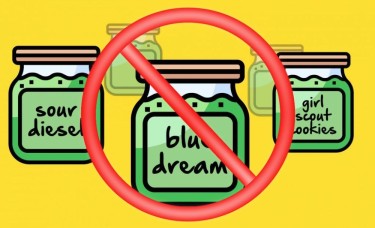
Copyright law has already affected cannabis names like GSC which was previously called Girl Scout Cookies. The breeders behind the strain were compeled to change the name with the Girl Scouts of America issuing legal threats. We can now think of a situation where traders get to trademark their names and then sell the rights to use such names. This is only a small nudge forward as regards breeders copyrighting strain names.


The possibilities are truly endless. Another scenario would be genetic labs assigning names to cannabis strains themselves based on complete standardized testing. Genetic lans can then send notes back to breeders notifying them of the strain they’ve bred. For example “Congratulations! The strain sample suggests you’ve cultivated Blue Kush 20-D”. Sure this would take the fun out of naming cannabis but it sure leads to adequate consumer protection.


But that’s not the end of it as further questions are still left unanswered: what body would enforce this standardization? Would it be the government or the industry itself?


Conclusion

It’s now clear that the cannabis industry needs to come up with a solution as soon as possible. Otherwise, the industry would be exposed to plenty of lawsuits in situations when genetic testing turns out to be wrong. If that happens, the government could be forced to step in and anyone familiar with lawmakers’ debates on cannabis knows the result might not be favorable. To this end, the cannabis industry needs to act now and find a clear standardized naming system.


SHOPPING FOR CANNABIS THE RIGHT WAY, READ THIS…

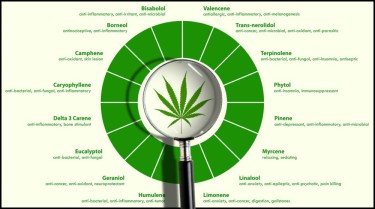
CANNABIS TERPENE SHOPPING GUIDE

DON’T BUY WEED BASED ON THC LEVELS, SHOP TERPENES!

OR..

CANNABIS STRAIN NAMES, WHAT DO THEY MEAN

WHAT DO CANNABIS STRAIN NAMES SAY ABOUT A PARTICULAR BUD?

[ad_2]

Source link

Wee-Delivery Chatbox
!

Wee-Delivery Assistant

How can I help you?

Hi there! 👋 Welcome to Wee-Delivery. How can I assist you today?
Call us: 888-422-9658
Hours: Mon-Fri 9am-1pm, closed 2pm-6pm, then open until 11pm. Saturday 9am-11pm, Sunday by appointment.
Delivery minimum
Are you open now?
Service areas
Verification process
Payment methods
After hours
How to order
Call 888-422-9658