
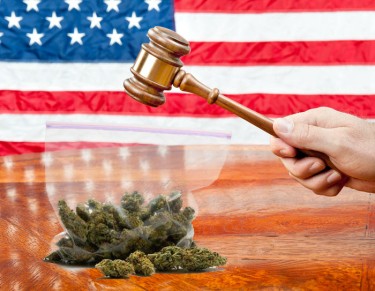
Cannabis Events Just Might Save Atlantic City

[ad_1]

Atlantic City, New Jersey could return to its original glory as a tourist destination with the boom of the Green Rush and the cannabis business events that follow. A city once dominated by the gambling industry is now facing its unknown future, and local experts think cannabis business-to-business events could solve that problem.

The familiar “glitter and sleaze” of Atlantic City’s boardwalk is known to locals, but the city has been on the decline for decades. Donald Trump’s Taj Mahal casino and hotel closed for good on October 10, 2016, and things haven’t gotten any easier for the gambling industry since then. Revel Casino Hotel followed, closing doors and being sold as well.

Things seemed to get worse in 2019, and despite an upturn in casino industry revenue in 2021, mostly due to a tax break, the city is still miles away from where it used to be. In addition, Atlantic City Tropicana’s workers are picketing for better pay and to unionize as the casino’s future remains uncertain. 

However, the economic effects of the rollout of the cannabis market could be the answer to the city’s long-term financial woes. During the first month of adult-use cannabis sales in New Jersey, the state brought home $24 million in tax revenue.

Skift Meetings, focused on event professionals, released a recent report about the true potential Atlantic City offers for the Green Rush—putting more than a bandaid on the city’s economic fallout.

The most obvious comparison is the boom of business events in Las Vegas, such as MJBizCon or CHAMPS Trade Show, drawing tens of thousands of tourists looking for networking opportunities and more. Atlantic City is home to 17,029 hotel rooms—a high ratio of rooms compared to other cities of its size as it is designed for tourism. Atlantic City could house large-scale events of the same nature.

Stu Zakim, president of Bridge Strategic Communications and a member of the Marijuana Business Association said “[Atlantic City] can be a wildly successful destination to host cannabis conventions,” Zakim told Skift Meetings.

Several others agreed that the new cannabis market in New Jersey is especially ideal for a city like Atlantic City. That’s especially true for cannabis conventions that need large facilities.

“The legalization of cannabis in the State of New Jersey opened a new vertical market for meetings and conventions in Atlantic City. We see cannabis as a growing industry, and it will have a significant increase on the overall economic impact of the destination,” said Meet AC’s President and CEO, Larry Sieg. Meet AC focuses on convention development in Atlantic City.

And the idea is nothing new. Then-Democratic Assemblyman Reed Gusciora—who is now Mayor of Trenton—called for Atlantic City’s enormous potential for the cannabis boom in 2016.

Atlantic City reached its peak long ago in the 1930s as a “wet city,” and since then, has succumbed to rapid decline, and casinos are failing. Its population nosedived to half the size when the city was booming.

The 3rd Annual New Jersey Cannabis Convention (NECANN) is being held September 9-10 at the Atlantic City Convention Center.

The potential has been building up for over a year. On February 22, 2021 New Jersey became the fourteenth state to legalize adult-use cannabis.

“The cannabis market in Atlantic City specifically is huge, untapped, and brimming with potential,” NECANN writes. “With only one major cannabis dispensary in the city. We are beyond excited to see the potential of Atlantic City’s cannabis community become a reality. NECANN prides itself on bringing personalized cannabis expos to fit the local communities and their needs.”

Check local listings for more events which are sure to follow.

[ad_2]

Source link

How Did Delta-8 THC Became Legal All Across America?

How Did Delta-8 THC Became Legal All Across America?

[ad_1]

intoxicating defintion of delta-8

On the 19th of May 2022, a federal court in California ruled that the legalization of hemp at the federal level via the 2018 Farm Bill, eliminated restrictions on several cannabinoids as well as delta-8 THC.


According to reports from San Francisco Chronicles, the Ninth U.S. Circuit Court of Appeals determined that substances containing delta-8 THC are legal. This is because the federal statute defines hemp as any part of the marijuana plant including extracts, cannabinoids, and all derivatives that contain less than 0.3% by weight of delta-9 THC.


The court, during the ruling, affirmed that the Constitution is silent about delta-8 THC


Delta-9 THC, which is often called THC is the most prominent psychoactive cannabinoid in cannabis and stays federally illegal. It is categorized as a Schedule I controlled substance together with heroin, peyote, and methaqualone. In comparison, Delta-8 THC generally occurs in minute quantities in the marijuana plant.


However, modern production and cultivation techniques allow for minor cannabinoids to be refined and concentrated into consumer products. With that, delta-8 THC substances have grown in popularity over the years, particularly in cannabis legalized states.


Similar to delta-9 THC, delta-8 THC also has psychoactive properties. However, users claim that the experience is typically more repressed with mild side effects compared to delta-9 THC. Although some cannabis advocates and several health professionals have affirmed that little is still known about the possible risks and health impacts of delta-8 THC.


For its part, the Ninth Circuit panel remarked that while delta-8 THC has intoxicating and psychoactive properties, it does not fall within hemp’s definition of federal law, hence it is legal.


According to one of the judges in the three-judge panel, Judge D. Michael Fisher, wrote that regardless of the decision to legalize delta-8 THC, the Court won’t alter its judgment for Congress. All three judges that gave the ruling were appointed by Republican presidents. According to Fisher, if a loophole was inadvertently created by lawmakers who didn’t plan to legalize delta-8 THC, then it is congress’ responsibility to fix such a mistake.


The Controversy

The Ninth Circuit judgment originates from a controversy over apparent copyright and trademark violation that hinged on the legality of delta-8 THC. The controversy kicked off when AK Futures, a company that produces vaping products and e-cigarettes, accused Boyd Street Distro of producing sham versions of its products which contain delta-8 THC.


According to data on appeal, it was proven that delta-8 THC products produced by AK Futures are lawful under the Farm Act and hence may get trademark security. On the other hand, Boyd Street claimed the products in question were bought from an individual who claims to be AK Futures’ authorized dealer. AK Futures then claimed its full inventory for that same product had been sold out and won’t be selling the brand shortly.


According to the San Francisco Chronicle, Boyd Street’s lawyer, Darrel Menthe, argued that no evidence that Congress had plans to legalize delta-8 THC was brought forward. If substances that contain cannabinoids are considered legal, then state and federal governments will probably regulate cannabis products to make use of them safely and not advertised to children.


Darrell Menthe further added that Boyd Street has no primary plans to appeal the decision of the Court.


The director of NORML California, Dale Gieringer, during an interview with the Chronicle, affirmed that it would be more ideal from a policy point of view to just legalize delta-9 THC. He believes that since extensive studies and research has been carried out on the cannabinoid for decades, delta-9 THC is more understood than delta-8 THC.


The Aftermath of the Court ruling


With the 2018 Farm bill enacted into law, delta-8 THC and several minor cannabinoids are now in a kind of legal grey area. While a lot of businesses in the cannabis industry argue that the products are legal, a lot of legislators in many states believe otherwise.


Now, the controversy has bubbled up reaching the federal level. To this end, the Food and Drug Administration (FDA), earlier this month, published its first set of warning letters. The letters were issued to cannabis firms as regards the alleged illegal sale of substances that contains delta-8 THC.


Before the warning letters, the FDA had initially published a notice to caution consumers of such products. This approach is similar to how the FDA sent warning letters to several companies over unlicensed advertisements of CBD.


At the moment, the FDA regulations do not allow for the advertisement of cannabinoids in the food supply. However, cannabis advocates and lawmakers have been pressuring the agency to modify its laws to permit the marketing of CBD since hemp has been legalized at the federal level.


As things stand, both parties now have congressional lawmakers pushing the FDA to create new regulations on CBD. Dr. Robert M. Cliff, the FDA Commissioner, during a hearing at the U.S House committee, affirmed that he will be needing a lot of support from Congress to make such development possible.


According to Dr. Robert M. Cliff, the present councils on the food side of the drug side will not be willing to provide what is needed to achieve such a goal. Meanwhile, the Drug Enforcement Administration, since late last year, has signaled that delta-8 THC is legal under the law.


In the same last year, the Texas state government also declared that delta-8 was illegal. This was a development many oppositions challenged in court achieving a pause on the proposed ban by state enforcement.


Conclusion


The controversy between AK Futures and Boyd Street gave enough clarity regarding the legality of e-cigarettes and delta-8 THC products under federal statute. It proves that federal courts are not paying close attention to the loopholes in psychoactive hemp derivatives that were not found in the Farm Bill of 2018.


However, irrespective of your feelings about delta-8 THC, this is a major turnaround in the history of marijuana legalization.


DELTA-8 GOES LEGAL, READ MORE…

FEDERAL COURT RULES DELTA-8 IS LEGAL

FEDERAL COURT RULES DELTA-8 IS LEGAL, BIG WIN FOR PROHIBITION STATES?

[ad_2]

Source link

Champion of LA exotic pot crowned at Zalympix Awards June 11

Champion of LA exotic pot crowned at Zalympix Awards June 11

[ad_1]

The best cannabis in the world’s biggest, most influential legal market, Los Angeles, gets its flowers Sat. June 11 at the Zalympix Championships Awards Show.

Top LA dispensary Greenwolf throws an awards party in downtown tomorrow night—awarding top honors to LA’s best-looking, best-smelling, best-tasting, gassiest, most potent, and best overall designer cannabis. The competition proved ferocious.

Greenwolf’s shop on Los Feliz Blvd in LA has nurtured the exotic flower scene since the medical marijuana days. After two prior contests, they blew the Horn of Gondor, calling in all the best brands for a battle royale. The flower that came in the $600 Judges Kit represents the best snapshot of what’s fire in weed in ’22. It’s easily the best box of pot we’ve ever had to smoke, and our waistlines and tolerances paid a hefty price to arrive at our winners’ list.

Related

How to order weed delivery online with Leafly

We have our idea of who might take home trophies tomorrow night, but looking at the entire box can help anyone understand the zaza landscape this year.

Zalympix Championships 22 box photo by David Downs Leafly smaller
We’re gonna need a bigger bowl: the $600 Zalympix Championships ’22 People’s Choice box (David Downs/ Leafly)

The center of gravity of modern pot converges at relaxing, high-THC, and indica-dominant hybrids, specifically current crosses from the GSC line (Gelato, Sunset Sherbert, ‘cookies’ genetics). Ten cultivars in the box battled it out to be King Kong of cookie mountain:

Greenwolf co-owner Adam Bergman told Leafly during the first Zalympix, “the connoisseurs, they really want that zaza, they want the new-new, and most of the new-new seems to be something that comes from Gelato or Zkittlez or Sherbert.”

Cereal A La Mode has four times the terpenes (2.1%) as national average (< 0.5%). (David Downs/Leafly)
Cereal A La Mode has more than four times the terpenes (2.1%) as the national average. (David Downs/Leafly)

The most pretty, novel, and strong to us? Cereal A La Mode #50 from Fiore with Serge Cannabis and Powerzzup. It’s like an amped up Cereal Milk—crazy pretty with trichomes and a thick Cereal Milk taste of creamy sugary carbs that translates to the smoke. The high just punches through whatever tolerance you’ve built up. Prepare to be keyed.

Cereal A La Mode combines Cereal Milk with Georgia Pie. Cereal Milk itself mixes Y Life (Cookies x Cherry Pie) to Snowman. Georgia Pie is Seed Junky Genetics’ Gelatti x Kush Mints. Remixing these genes continues to make the weed that defines exotic.

I could see the Sherblato winning here, just for its perfect execution of a Sherbert to a Gelato. But these terps have become familiar, while Cereal A La Mode went to a whole other level with it.

Z terps keep glowing

Cali Kush Farms' Karma's Zowahh (David Downs/ Leafly)
Cali Kush Farms’ Karma’s Zowahh (David Downs/ Leafly)

Beyond the intense Cookies fight, we are even more hyped for the second focal point of the Zalympix ’22—what’s going on with Zkittlez genes in 2022. There, you had Deep East + Wizard Trees’ Zoap going up against Zushi + The Ten Co’s Blue Zushi, and Cali Kush Farms’ Karma’s Zowahh. I want permanent ounces of all three.

It might be time for Zoap to get its trophy—this batch looked, smelled, tasted and felt like the perfect smoke. The Oakland team has created its own lane by hunting and crossing OZ Kush (Zkittlez x OG Eddy Lepp) and has something really original—rich, syrupy tropical, creamy fruit for days. Blue Zushi jumped out of the bag even harder, but looked a little less perfect in this batch. The smoke and taste stayed true to the Blue Zushi that won the last Zalympix—just amazing blue raspberry Z terps that get you super lit.

And I have a special place in my heart for Karma Genetics’ Zowahh—a Zkittlez to Karma Genetics’ Sour D Bx. It’s the only Sour D cross in the box, and to see Zkittlez turn the volume and the syrup up on the Diesel—just superb.

What’s the Zalympix again?

The Zalympix is a play on the weed word ‘zaza’ (slang for exotic), mixed up with Olympics. It’s a championship contest for exotic pot in the roaring arena of global cannabis culture—LA. Regular people chose the winner by buying a box for $600 and getting a code to pick the top flower in six categories, including best overall.

Winners from two prior Zalympix ended up in the Championships, which was why the box was so hard to judge. The boxes went out May 16th, and the awards event is June 11. Judges got two tickets to the event and 2 grams of flower each from each competing brand, plus some goodies. The boxes sold out.

The awards event is at Wisdome in LA, co-hosted by Secret Sesh, with dozens of top-shelf brands exhibiting and over 4,000 guests. Compound Genetics launches its Red Bullz flower there tomorrow. The Zalympix also comes to Michigan with partner Exotic Matter. The first batch of boxes went on sale Friday and sold out.

We’ll update this post with winners and notes.

David Downs's Bio Image

David Downs

David Downs directs news and lifestyle coverage as the California Bureau Chief for Leafly.com. He’s written for WIRED, Rolling Stone and Billboard, and is the former cannabis editor of the San Francisco Chronicle, as well as the author of several cannabis books including ‘Marijuana Harvest’ by Ed Rosenthal and David Downs. He co-hosts The Hash podcast. TW: @davidrdowns | IG @daviddowns

View David Downs’s articles

[ad_2]

Source link

California Drought Prompts Legislation to Increase Fines for Water Pollution for Illegal Grows

[ad_1]

Two bills were recently introduced to prevent illegal cannabis cultivation efforts, which are using more water than ever in the wake of a historic California drought.

“Illegal cannabis farming is devastating the desert communities of San Bernardino County,” said San Bernardino County Board of Supervisors Chairman Curt Hagman in a press release. “The County is determined to stop this terrible damage to the environment and to protect the lives and property of our residents from lawless criminals.”

The county is sponsoring Assembly Bill 2728, introduced by Assemblymember Thurston Smith, and Senate Bill 1426, introduced by Senator Anna Caballero, to tackle these concerns.

AB-2728 would increase the fines for illegal cultivation to $1,000 for each day of violation, and $2,500 for each acre-foot of water diverted (and if that measurement isn’t specified, $500 per plant). These stipulations would only take place in a “critically dry year immediately preceded by two or more consecutive below normal, dry, or critical dry years” in the event that the California state governor has issued a state of emergency. “Our state is dealing with an unprecedented number of illegal cannabis grows, particularly in the rural desert communities that I represent in the legislature. Because of this, our laws need to require compliance and ensure that illegal activity is punished,” said Smith about the bill. Most recently, AB-2728 was referred to a committee on June 1.

SB-1426 would punish “unauthorized tapping into a water conveyance or storage infrastructure or digging or extracting groundwater from an unpermitted well.” “Illegal cannabis farming is killing wildlife and wreaking environmental damage across the state,” Caballero said in a San Bernardino press release in March. “This bill will help stop the pollution of our groundwater supply and the theft of water, which are all the more important during an ongoing multi-year drought.” Currently, as of May 19 the bill is “Held in committee and under submission” for the time being.

California Gov. Gavin Newsom has proclaimed a state of emergency for California’s drought three times so far in April, May, and July 2021 due to the impacts of climate change. In July 2021, he asked California residents to cut down on water usage with a goal of reducing water use by 15%. More recently in March 2022, Newsom shared that that goal was not met, and he asked local water agencies to “implement more aggressive water conservations.”

San Bernardino County is one of many regions in California experiencing dry conditions. Los Angeles County Sheriff Alex Villanueva explained the data in relation to the amount of water required to grow cannabis. “The average marijuana plant requires a minimum of 3 gallons of water per plant, per day,” said Villanueva, according to NBC Miami. “Just the 2021 numbers alone amount to 150 million gallons of water used to bring that crop to harvest. That’s just enormous.”

However, the amount of water that a cannabis plant needs to thrive is highly dependent on its location, growing medium, and current stage of growth. A 2019 survey called “A narrative review on environmental impacts of cannabis cultivation” estimates that outdoor cannabis requires 5.5 gallons per day per plant in August, and 5.1 gallons per day per plant in September, whereas indoor grown plants used 2.5 gallons in August and 5.1 gallons in September. Ultimately, the study stated that cannabis plants need much more water and nutrients to thrive, unlike other crops such as wheat, corn/maize, soybean, cotton or rice.

Another study published in October 2020, called “Water storage and irrigation practices for cannabis drive seasonal patterns of water extraction and use in Northern California,” stated that legal cannabis cultivation farms use groundwater wells more often than other water sources, such as streams, captured rainwater, springs, and municipal water systems. “Our findings indicate that water extraction from farms using groundwater wells generally occurs during the summer dry season and highlight the need to assess their potential impacts to connected surface water in streams,” the study authors wrote.

Assemblymember Tom Lackey, a longtime resident of the California high desert, issued a statement of his own in regards to water being used and polluted by illegal cultivators. “To any of those who are engaged in the illicit grows: I want you to know there’s a collective effort, and we’re coming after you,” Lackey said at a press conference on May 18. “You come after a very sacred thing: our community. You come after our desert, and you’re stealing our water. You’re poisoning our land, and enough is enough.”


[ad_2]

Source link

Cannabis Does a Better Job for Cancer Pain Than Opioids?

Cannabis Does a Better Job for Cancer Pain Than Opioids?

[ad_1]

cannabis for cancer pain

Study Finds That Cannabis Is Safe For Treating Cancer Pain – Cancer Patients No Longer Need Opioids


As if being diagnosed with the Big C wasn’t bad enough, cancer patients often have to deal with a multitude of other debilitating conditions, with the worst being cancer-related pain.


While a cancer diagnosis doesn’t automatically mean you’ll be in pain, some 55% of cancer patients and 40% of survivors still suffer from chronic pain. Almost half of patients have to use opioids to manage the severe pain caused by the cancer itself which in most cases prevents patients as well as survivors from living a normal life. There are many factors that contribute to how much pain one feels; some days may be filled with pain while others are more tolerable, but no matter what, pain shouldn’t be accepted as part of cancer. There are treatments that are safe and effective available.


Unfortunately, opioid medications have become the standard treatment for severe pain, cancer or not. These ultra-strong chemical drugs may be effective at numbing pain, but at what cost? The opioid epidemic in America has taken millions of lives because it’s far too easy to overdose on it. Yet medical professionals continue to prescribe opioids to cancer patients and other terminally ill because it’s what helps them manage pain.


Opioids are extremely addictive, and even the slightest overdose can cause death.


So what are cancer patients struggling with pain left to do?


Cannabis is a Safe Alternative to Opioids


Medical marijuana has been making waves for its powerful ability to treat pain safely and naturally. This is critical for cancer patients.


A brand-new assessment focusing on the therapeutic benefits of marijuana for pain caused by cancer confirms this. The study, which was published in the medical journal, Frontiers in Pain Research, was conducted by researchers in Israel. “Traditionally, cancer-related pain is mainly treated by opioid analgesics, but most oncologists perceive opioid treatment as hazardous, so alternative therapies are required,” says David Meiri, the study’s author, and an assistant professor at the Technion Israel Institute of Technology.


“Our study is the first to assess the possible benefits of medical cannabis for cancer-related pain in oncology patients; gathering information from the start of treatment and with repeated follow-ups for an extended period of time, to get a thorough analysis of its effectiveness,” he said.


For the assessment, they spoke with cancer patients who were seeking other choices available to treat their pain as well as other cancer symptom relief. They then worked with oncologists who issued a license for medical cannabis for their cancer patients, and interested patients who wanted to join the study were asked for their feedback.


“We encountered numerous cancer patients who asked us whether medical cannabis treatment can benefit their health,” explains Gil Bar-Sela, the study’s co-author, who is also an associate professor at the Ha’Emek Medical Center Afula.


The authors particularly wanted to get more information on cannabis for cancer-related pain. “Our review of existing research revealed that actually not much was known regarding its effectiveness, particularly for the treatment of cancer-related pain, and of what was known, most findings were inconclusive,” he adds.


“Patients completed anonymous questionnaires before starting treatment, and again at several time points during the following six months. We gathered data on a number of factors, including pain measures, analgesics consumption, cancer symptom burden, sexual problems, and side effects,” Bar-Sela adds.


After reviewing the data, the researchers found that a great deal of outcome measures revealed improvements. Cancer symptoms as well as pain scores were reduced though it was more significant that the patients were able to stop their intake of opioids or other painkillers. Additionally, they reported that almost half the participants were successfully able to wean off all painkillers just 6 months after treatment with medical marijuana.


“Medical cannabis has been suggested as a possible remedy for appetite loss, however, most patients in this study still lost weight. As a substantial portion were diagnosed with progressive cancer, a weight decline is expected with disease progression,” Meiri said.


Other Studies Reflect Similar Findings


In a 2021 clinical trial conducted by researchers at Minnesota’s Cancer Research Center together with the Minnesota Department of Health involved analyzing patients with stage IV cancer and their consumption of opioids and license cannabis products.


Thirty participants in the study were tasked to consume plant-derived extracts during the trial, starting at 2.5-5mg of THC/CBD, increasing to 30-40mg of THC and CBD each day for the course of the study which lasted two to four weeks. “Medical cannabis use led to improvements in achieving personalized pain goals and lower overall opioid requirements. No serious adverse events with cannabis were reported, and most patients who used cannabis reported that benefits outweighed negative effects.”


“Our results support prior studies suggesting cannabis may improve pain and minimize opioid utilization in both cancer and non-cancer settings… Incorporating cannabis into routine cancer care may improve pain control and minimize opioid requirements,” the authors concluded.


Meanwhile, a 2018 assessment from the European Journal of Internal Medicine, conducted by Tikun Olam researchers, looked at how effective cannabis was for cancer patients. They found that cannabis was efficient in decreasing cancer patients’ intake of opioids within 6 months from the time they started consuming it.


 Lihi Bar-lev Schleider, the study’s lead researcher, disclosed to the Rolling Stone that, “Cannabis is a very good alternative to reduce opioid consumption, to increase quality of life, and to reduce pain, nausea and vomiting.”


Conclusion


There is solid data out there about the efficacy of cannabis for treating cancer symptoms, including pain – which in itself is already very difficult to treat. If you or a loved one is taking opioid medications for cancer, speak to your oncologist about weaning off the drugs and switching to cannabis instead for a safer experience and improved quality of life.


CANCER PAIN AND CANNABIS, READ MORE…

CANNABIS INHALER FOR CANCER PAIN

CANNABIS INHALER FOR CANCER PAIN IS A REAL THING, READ THIS!

[ad_2]

Source link

Wee-Delivery Chatbox
!

Wee-Delivery Assistant

How can I help you?

Hi there! 👋 Welcome to Wee-Delivery. How can I assist you today?
Call us: 888-422-9658
Hours: Mon-Fri 9am-1pm, closed 2pm-6pm, then open until 11pm. Saturday 9am-11pm, Sunday by appointment.
Delivery minimum
Are you open now?
Service areas
Verification process
Payment methods
After hours
How to order
Call 888-422-9658