The use of herbal tinctures for its therapeutic benefits has been around for many centuries.
In fact, experts estimate that tinctures have been used since the 12th to 17th centuries primarily for teaching medicine. Tinctures are essentially highly concentrated extracts of herbs that are made by soaking up medicinal herbs in oil, alcohol, or vegetable glycerin. Even cannabis indica tinctures could be purchased in pharmacies until the 1920’s, though the use of tinctures declined when pharmacology began using pills to treat illnesses.
However, the use of tinctures are on the rise once again. More people are becoming aware of the benefits of using natural and herbal tinctures, making them a wonderful way to medicate with a variety of herbs especially when one doesn’t have the luxury of time.
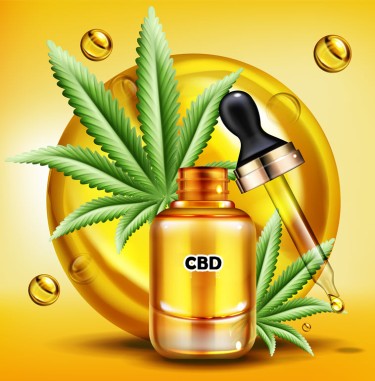
Cannabis tinctures are no different. Even though there are numerous ways you can consume marijuana for its medicinal benefits, consuming through tinctures by placing it underneath your tongue has proven to be one of the quickest ways to absorb cannabinoids, terpenes, and other therapeutic compounds in the plant for quick relief. And since cannabidiol (CBD) doesn’t have any psychoactive properties, it has become the medicine of choice for millions of people around the world who need fast-acting and effective relief from a myriad of symptoms including pain, inflammation, insomnia, anxiety, epilepsy, Parkinson’s disease, and so much more.
There are other benefits to using CBD tinctures, aside from the fact that they are concentrated and fast acting – you only need a miniscule amount to feel its benefits. Additionally, CBD tinctures are low in calories and don’t contain other unwanted ingredients like preservatives and additives because they don’t need flavoring. They simply go underneath the tongue to work and don’t have to taste as flavorful as edibles.
Having said that, making your own CBD tinctures at home is so easy. It’s a wonderful way to have full control over all the ingredients that go into these tinctures so that you can medicate yourself and your family whenever needed.
What You’ll Need
Since hemp is federally legal all over the country, buying hemp is the first step to making CBD tinctures. The reason why we choose hemp plants over marijuana is because hemp contains much more CBD than marijuana. In addition, hemp contains under .3% THC, which means you won’t experience any high from it.
Making tinctures is easy, even if you’ve never done so before.
¼ ounce hemp flowers
Parchment paper
Baking sheet
Glass jar with lid
190-proof Everclear alcohol, or a 200-proof food grade alcohol
1 oz. amber glass dropper bottle
Mesh strainer
Cheese cloth
Bowl
*Note: you can also use oil instead of alcohol, and if you decide to use this method, be sure to use equal amounts of decarboxylated hemp to oil, such as 440g of flower to 500ml olive/MCT/coconut oil.
Process
Grind the hemp flowers and carefully remove any seeds and stems if you find any.
Preheat your oven to 250F to prepare the stash for decarboxylation, which is necessary in order to activate the CBD.
Scatter the hemp flower on a baking sheet that has been lined with parchment paper.
Roast the CBD flowers for 45 minutes, but check on it every 10 minutes or so and turn the flowers around to ensure uniform decarboxylation. The kind of finished texture you are looking for is when the hemp flower easily crumbles when held between your fingers. However, you can opt to decarb for longer, up to 2 hours, if you want even more potent CBD as well as terpene expression.
Once done, let the hemp flowers cool for 15 minutes.
Place the hemp flowers into the glass jar, and fill it up completely with the alcohol. Ideally, the hemp flowers should fill up around 2/3 of the jar.
Seal the lid on tightly, shake it vigorously, then leave it in a cool, dark spot inside your house for 4 weeks. During this time, the alcohol will extract the therapeutic compounds from the hemp flower. Give the bottle a good shake 2-3 times a week while waiting for this process to complete.
Once the cure time has finished, pour the tincture through a cheesecloth to separate the flower from the liquid.
Pour the tincture into the glass jar with dropper, so that you can simply drop it underneath your tongue whenever needed.
When the tincture is not in use, always keep it in a cool, dry place to ensure a long shelf life.
Using CBD Tinctures
Now it’s time to try your CBD tinctures.
For first-time users, the advise is always to start low and go slow. Start by placing one drop underneath your tongue and observe how you feel for a day. Remember that tinctures are highly concentrated, so a little goes a very long way. You can expect to feel its effects in 2-5 minutes. First-time users should be a in a safe setting, such as your home, that does not require you to drive.
CBD tinctures are also extremely versatile. Aside from placing them underneath your tongue, these are also great vehicles for easily infusing foods and drinks. Have some fun with it by adding a drop or two into your coffee, juices, smoothies, or even into baked goods. You can even add a few drops into other marijuana products, or use this as a base to create your own topicals right at home.
Oklahoma Activists Submit Signatures for Recreational Pot Legalization Initiative
Cannabis activists in Oklahoma have achieved a significant feat in their attempt to legalize recreational cannabis in the state. This week, activists have submitted more than 160,000 signatures on petitions qualifying recreational cannabis legalization ballot initiatives for the 2022 general election.
The signatures for State Question 820 were submitted by the Oklahomans for Sensible Marijuana Laws to the state Capitol. The submission was made on Tuesday, 5th of July 2002, close to a month before the November ballot qualification deadline.
If enacted, State Question 820 would legalize recreational cannabis use for individuals aged 21 years and older. The Oklahoma Medical Marijuana Authority will also be tasked with the initiative to draft and implement regulations to oversee the new recreational cannabis industry.
The campaign’s representatives claimed that getting the signatures needed to qualify for the ballot initiative was quick across the state. According to them, polling data also suggested that Oklahomans showed strong support for recreational cannabis use. The Oklahomans for Sensible Marijuana Laws had until August 1 to collect 94,910 to qualify the initiative for this year’s ballot. But surprisingly, the required signatures were eclipsed by approximately 70,000 signatures following Tuesday’s submission.
According to Michelle Tilley, the campaign director, the number of signatures they were able to collect shows that there’s enough momentum for the campaign. Most importantly, it shows that Oklahomans are prepared to vote for recreational marijuana legalization.
Ryan Kiesel, the senior campaign adviser also indicated that he anticipates the initiative to be popular among voters during the November elections. Taking to local media, Ryan affirmed that activists are expecting Oklahomans to say yes to the initiative.
Initiative Encompasses Provisions for Expungement of Cannabis-Related Crimes
e Question 820 also features provisions that enable individuals with previous cannabis convictions to appeal to the courts to nullify their conviction and have their criminal record erased. Representatives of the campaign strongly believe that thousands of people would benefit from a clean criminal record under the initiative.
Kiesel affirmed that Oklahomans are in support of the bill as they believe people should not be repeatedly punished for an action that’s no longer criminal.
State Question 820 is also said to set a 15% tax on recreational cannabis sales, which slightly doubles the 7% tax rate tax on medical cannabis sales. Revenues generated from taxes on reactions to cannabis sales would then be allocated to drug treatment programs, school districts, the state court system, and local governments that permit the operations of legal recreational cannabis businesses. Kiesel also pointed out that legalized adult-use cannabis provides the state with a new and massive revenue source.
Kiesel trying to set things clear affirmed that medical cannabis was never meant to generate huge revenue for Oklahoma, it is purely about medicine. But when it comes to recreational cannabis, it is a huge revenue generator. The revenue that is presently generated from medical cannabis will be considered very small, considering the amount of revenue expected from recreational cannabis sales.
Meanwhile, as petitions supporting the initiative gained massive support in the metropolitan areas of Oklahoma, Question 820 also has considerable voters outside Oklahoma City and Tulsa. Kiesel affirmed that the campaign starting from Ardmore to Broken Bow to Woodward has reached everywhere.
Based on Kiesel’s assertions, the initiative had received massive support and the momentum for the campaign is at an all-time high. The number of signatures collected indicates that Oklahomans are prepared to vote for recreational cannabis laws, facilitating huge investments in crucial state services.
Recreational Cannabis Could Also be Legalized By Constitutional Amendment Initiative in Oklahoma
A different group, known as Oklahomans for Responsible Cannabis Action, is also campaigning for the enactment of a state constitutional initiative. The initiative is said to help legalize recreational cannabis sales and use for adults. However, given that State Question 819, would revise the Oklahoma Constitution, the faction has been given approximately 3 months to amass 177,957 signatures in favor of the initiative. By so doing, the endeavor will be able to qualify for the November ballot initiative.
In an attempt to amend the present Oklahoma Constitution, State Question 819 would be accountable to only nominal revisions of its requirements by the state legislature if enacted. Nonetheless, the need for a more significant change would require Oklahomans to take another vote. But as things are, State Question 820 is at risk of more substantial alterations by lawmakers considering it is a statutory initiative.
The Oklahomans for Responsible Cannabis Action’s campaign director, Jed Green, claimed that recreational cannabis legalization should be consecrated in the state constitution. In so doing, it will be protected from any attempt of being rolled back by a state legislature that is against legal cannabis use by adults.
According to Green, the present situation being faced with the established statutory measure is that the legislature is relating the Oklahoma double standard to cannabis businesses. Green affirmed that the legislature came in an unexpectedly increased several fees while enacting new regulations on cannabis businesses.
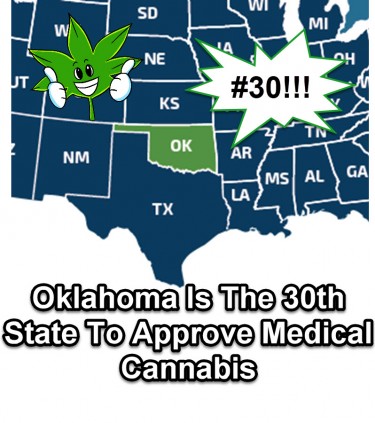
With the enactment of State Question 788, Oklahomans legalized the sales and use of medical cannabis in 2018. But since thr initiative is also a statutory initiative, the Oklahomans for Responsible Cannabis Action is now campaigning for the enactment of State Question 818. State Question 818 is said to revise the state constitution to protect the legalization of the sale and use of medical cannabis. The group has until thr 22nd of August 2022 to collect more than 170,000 signatures for both proposed initiatives.
Conclusion
The cannabis industry has witnessed nothing but support and growth in Oklahoma in the last few years. With medical cannabis reforms have come into full play, many Oklahomans are now well aware of the massive economic benefits the state can again from the legalization of recreational cannabis.
Considering the number of signatures on the petition, truly, support for cannabis legalization is at an all-time high and Oklahomans are ready to vote in the State Question 820 come November.
This past summer, as the US military exited Afghanistan, and the country has fallen back into a transitional phase. Afghanistan first became a nation just over 100 years ago in 1919, but one thing that has always transcended the country’s rocky political history is its legendary hash scene. Despite the Mujahideen, Taliban or communists, Afghanistan’s hash industry has transcended the people and policies that have made life for Afghan hash producers difficult over the past 50 years. The flood of hash that once hit Europe and America following the first major hash haul in 1967 has long since been forced out of practice, but the stories of this prime time of hauling hash across multiple country’s borders remain fascinating tales of a different time. High Times obtained an exclusive interview with Ray, who recounted his trips through Europe and Asia and the challenges he and his companions encountered on their journey.
The first hash haul is said to have occurred one year before things really hit the gas on the “Hippie Trail,” where thousands of westerners traveled east through Afghanistan on their way to find enlightenment in India. But for many, their trek would make a stop in Kabul, the capital city of Afghanistan. There they would start their quest to stock up on as much hash as possible before heading back west to wherever they called home; be it Germany, Amsterdam or southern California.
Much of what we know about the smuggling aspects of the trail come directly from one of the first groups to make it happen—The Brotherhood of Eternal Love, which included members from southern California. Brotherhood member Ron Bevan is considered to be the first to run an operation out of Kabul in 1967, although there were many groups doing it at the time.
Among these other groups, there was a young man named Ray. High Times sat down with Ray to talk about his past hash smuggling experiences, as we discussed the fallout from the US exit from Afghanistan, wondering what it could mean for a hash scene that has already been devastated for decades.
Hop In—We’re Going Smuggling
The days before Ray’s first trip to Afghanistan were filled with proper hippie business. “We went to southern Oregon in the late ’60s and for whatever reason out of pure synchronicity a bunch of us from northern California and southern California all ended up in this one house in southern Oregon,” Ray told High Times.
The group decided to take things to the next level and looked to start a commune. They spent some time hunting for a property, but after some hiccups with the search, they regrouped in California in 1968. A lot of the people that originally tossed that idea around remain friends to this day after originally finding each other all those years ago.
Part of that group included some friends who had already been smuggling hash from Afghanistan a year or two before that, and they had just brought back a load. In those days, Ray and his friends were staying in the High Sierras—the perfect place to unload some hash.
Most people associate the “Hippie Trail” with the image of a classic Volkswagen bus and a Hanomag Camper that rolled up to their spot in the same hills that was also very popular with other hash smugglers, such as Darrell. “He came, we unloaded it there, and it took a while. And after he got what he thought was the load amount he goes, ‘Okay, you guys can have the rest.’ And so we picked away at it because it was in the framework,” Ray said, “We had to use all kinds of tools we implement to dig it all out but I think eventually we got like another 10 pounds.”
This would be the first time Ray mentioned the man that he eventually partnered with to make the travel east. “So you know we are quite thrilled to make a connection with him. This is Long Beach, brother, I can give you his name because he’s no longer with us. Well, he had many names, but we knew him as Darrell,” Ray noted with a laugh.
Before connecting with Ray, Darrell had already made two or three trips. He was always a driver, and for good reason. In this critical role, he was the main person who drove from Holland to Kabul and back, through every border. He didn’t even need a map when he was on his runs.
Eventually Darrell shared his next plan with Ray: “Here’s what I want to do next time because I’m gonna have another Honomag, but also I’m going to buy a really nice motorhome,” Darrell told Ray at the time.
The motorhome was called a Revcon. It was the top-of-the-line in 1968 when it was designed. It had an aerodynamic aluminum body, and the 26 rails that ran the length of its frame were a hash smuggler’s dream.
“Very cool, very modern, front wheel drive. And he goes ‘I’m gonna buy this and we’re gonna, this is the vehicle we’re gonna make special rails that go inside the rails and we’ll have little hooks to pull it out,”’ Ray said of Darrell’s original plan.
Ray and Darrell had some friends that were engineers who helped them with building the rails. Eventually they would drive the Revcon across the country from California to New York, shipping it on to Rotterdam, Netherlands.
Darrell asked Ray to tag along for the full run to Afghanistan. “I go, ‘Sure, I’ll go slide and sit shotgun,”’ Ray replied. “It was like the coolest ride I ever took. But we were vegetarian at the time, so we were doing a lot of soups, avocados and carrot juice. We had it all decked out with the Norwalk Press, which is a real good juicing machine. We totally kept our eating habits intact.” Their eating habits would eventually earn them the nickname “The Carrot Juice Boys.”
The group prepped for their journey from Rotterdam after picking up the Revcon. They would make their way through Germany and Austria, then travel through Yugoslavia, Bulgaria, Turkey and Iran before finally reaching the Afghan Border.
That first trip would end up taking a few months, after Ray and Darrell got caught up in eastern Turkey. The Revcon’s front wheel drive engine featured torsion bars in the front, which didn’t pair well with the traffic or potholes they encountered on their journey. They lost control of the Revcon for a second, but were able to come to a stop in the center median. “Eastern Turkey is definitely the sticks, very isolated and very desolate,” Ray said of the breakdown.
When you break down out there, it’s common to surround your vehicle with rocks. They did so before hitchhiking to the closest town. They brought mechanics back to the Revcon, knowing they wouldn’t be able to replace the bar, but could rig something to get the Revcon back to civilization.
They hobbled into Tehran, Iran and messaged home for the part they needed. It wasn’t a fast process. “So we were in Tehran for about a good month, repairing the vehicle, but everything got straightened down,” Ray said, “So we rolled into Afghanistan, probably in late summer of 1970.”
Of Science and Borders
The mission was to obtain a couple hundred pounds of hash and five gallons of hash oil. While other groups had brought hash loads back for about three years before this trip, to the best of The Carrot Juice Boys’ knowledge, they were the first people ever to bring a flash evaporator to Afghanistan. Much of the Revcon was loaded with Everclear for their grand chemistry project.
If the idea of driving across the middle east with a chemistry set seemed weird, the opulence of the Revcon stole everyone’s attention at each border crossing, simplifying getting its contents across various borders in both directions. “I mean, they’ve seen the ‘Hippie Trail’ in the VW Vans, the Honomags, but they’ve never seen anything of this magnitude in this amazing really cool motorhome,” Ray noted on the border crossings. “And of course once we got into Persia we decked it out with Persian carpets and runners and it was looking really cool.”
They were very much playing the part of rich Californians, but they would still be pulled from the line at every border. “The head custom guy would come out and just wanted to go inside and look at it and say ‘oh very nice,”’ Ray said, “It’s just amazing.”
One time, a border agent pulled out their chemistry set and pulled out a beaker. He asked Darrell and the pair what it was. “Glass,” they replied. The border guard looked at it again, nodded in agreement with their take, and put it back in the box.
Iran had some of the toughest border restrictions, but once you entered the country, the group found that it was amongst the most welcoming as they attempted to Westernize before the Shah fell in 1979. Ray emphasized that it was one of the nicest places he’s ever been to, as they spent the month waiting for car parts. “They just want to make sure you’re [not] smuggling weapons or anything, doing nefarious stuff, but all the people there were so nice,” Ray noted of Tehran. “They just were so hospitable and helped us [with] whatever. If we’d go looking for the embassy, [residents] would take us in their car, take us to their home, feed us and then take us to the embassy.”
But with a repaired Revcon, things got a bit rougher as they approached the Afghanistan border. Every hotel featured signs that warned a prison sentence of 10 years in prison for a gram of hash, and life in prison for a kilo. “They try and put the fear in you, but we got some good hash in Turkey,” Ray said with a laugh.
After getting into Afghanistan, the group headed straight for Kabul. They stayed in a fancy neighborhood fitting of rich Californians. From there, they would head to The Solan Hotel, a hotspot for hash enthusiasts and general tourists heading in both directions on the trail.
One of Ray’s favorite things about The Solan Hotel was a space attached to the courtyard where you could park your van and camp near a little park attached to the hotel. There was always an ongoing rotation of Europeans and a few Americans, and it was always a good time.
The locals did their best to keep the hippies and smugglers happy, too. “Afghanis just loved us because we had money and we were very careful about religion,” Ray said. “We were very aware of how they are and how not to trespass or do anything [that] goes counter to them. There’s just some things so you don’t mess with. You don’t eat during the day during Ramadan and walk around chewing food.”
But Ray argued that besides that kind of thing, the religion of Islam was based in hospitality. Over the course of three trips that, in total, took about a year to complete, Ray picked up some language skills. One of the things he noticed immediately was how caring and personal everything was. He noted that a lot of the conversation focused on how the other person was feeling.
Back in their Kabul neighborhood, they rented out a two-story mansion and set up the hash lab. They would do a lot of the extraction work offsite and then bring the crude material back to the flash evaporator in the bathroom to get all the alcohol out. It would take them a couple of months to get the five gallons of hash oil they were shooting for.
“THEY JUST WERE SO HOSPITABLE AND HELPED US [WITH] WHATEVER. IF WE’D GO LOOKING FOR THE EMBASSY, [RESIDENTS] WOULD TAKE US IN THEIR CAR, TAKE US TO THEIR HOME, FEED US AND THEN TAKE US TO THE EMBASSY.”
Unloading the Goods
High Times asked Ray how much hash they needed to make the five gallons. Ray estimated that about 200 kilos were concentrated into the oil. He also noted the unpressed hash made for much better oil, then they hid the rest to stuff in the specialized frames of the Revcon. “The rest we had pressed up and put into the containers, the square tubes, it actually ended up making the hash look like a Hershey bar. We sold most of that in Amsterdam and I’m sure to this day, there are a lot of people there who call it ‘screw hole hash,’” Ray said.
The hash received this name when they put five to seven of the bars together and put a screw through the stack, just to tighten it up before they tossed it down the tube designed to fit into the Revcon’s internal storage system. “It was a precise measurement that we had all the patties pressed,” Ray noted on the precision used to fill each tube with as much product as possible.
As for the oil, that came out pretty great, too. The flash evaporator kept the oil at a reasonable temperature as it sweat off the Everclear used in production. “I mean, it was a black oil. But because of the flash evaporator we didn’t have to heat it in a high temperature, it was in a vacuum, so you got the real essence of really, really good hash,” Ray said. “I don’t know if you’ve had really, really good hash but it’s very floral and very sweet.”
Just like today, in order to make the best oil possible, they had to get their hands on the best material possible. Ray described the process that took them around the country from their upscale Kabul hash lab and base camp. The first connection they ever made was in Kandahar, Afghanistan.
“We used to go to Kandahar, but that was a tough place to be,” Ray noted on the trip. “Kandahar was like going back 1,000 years. I was like ‘Oh my God. That was an ancient town.’ And you couldn’t help but get dysentery just hanging out there for any amount of time. But Kabul was more modern.” In addition to the more modern vibe in Kabul, you could basically get whatever you needed. And in reality, it wasn’t that competitive with other smugglers in town because there was just so much hash to go around.
When it was time to return, the Revcon would leave Afghanistan without Ray. They hired a German woman to play the role of a fancy lady with a fancy motorhome. “We paid her like $10,000 or something. And she was great! She had like a fur coat. I mean, she’d look the part of being wealthy,” Ray said. She was the perfect accessory for a driver who had already completed this trip five times before. The key was the balance of looking like a regular person. Not being an asshole, but also not being too nice, in the hopes of getting waved through borders smoothly.
Ray and Darrell made it to Holland with no problems. The Revcon worked like a charm before being unloaded on a small farm outside Amsterdam. Most of the load would be sold locally.
“But here’s a luggage story for you,” Ray laughed. While the hash moved in Europe, they decided to bring a bunch of the oil back to America. At the time, Ray estimated that the oil was selling for about $10 a milliliter, so a whole liter was worth roughly $10,000 bucks. “We went to a liquor store in Amsterdam and bought Kahlua. Then we’d melt the little seal and stretch it and pull it over the bottle, undo the cap and pour out all the Kahlua and then poured in the hash oil. Then we heated the seal back up and you know back the cap and so it looked sealed, and we’d take two bottles,” Ray said. “So, we go to the airport and we’d go to the duty free and buy another bottle of Kahlua and we traded out the bottle we bought at duty-free. So, we just carried it right across check-in.”
Ray emphasized not to forget the exchange rate. That $10,000 bottle in 1970 would be worth over $70,000 today. He can’t recall how many bottles made it back, the whole five gallons would be worth $1.2 million today.
Adapting the Experience
On Ray’s two trips to Afghanistan, he already had the lay of the land. He flew into Kabul and would buy the hash ahead of time to limit the time spent in the country compared to the marathon road trip and hash oil production of his inaugural adventure.
Ray’s first trip lasted so long he actually overstayed his visa. When he returned for the second run the customs people at the airport noticed it on his passport and gave him a shorter amount of time. After learning his lesson, he got a new passport for the third run. It did the trick, and it was clear sailing at customs. “So, I’d go ahead of time and get there and order up and make sure everything’s ready,” Ray said, “So when the vehicle came through it wasn’t just there, it was like it was going across. It wasn’t there longer than a week or two, which is about the average tourist time somebody might spend there.”
The later runs wouldn’t feature the Revcon. The team moved on to four-wheel drive Suburbans with special compartments in the gas tank that could hold over 100 pounds of gas. The only problem with it was you had to stop a lot more to fuel up, but the trucks did a lot better on the roads than a motorhome.
“But it was pretty safe because to get to it you’d have to take out the whole gas tank and cut into it,” Ray said, “And that was the last time that we did it. We actually hired a professional race driver, who was a dear friend, and he did a good job.”
The gang had a mission of wider psychedelic enlightenment between trips. As they made the runs through the early 1970s, a lot of the resources went into furthering that mission. The freedom Ray and his peers were in search of came with the smuggling and they wanted to make sure to pay it forward. What would start as personal projects for the group would eventually end up in the hands of nonprofits down the line in the form of an unfinished boat. “So the majority of the money that we ever made went on that boat, eventually when the Russians started coming in and put in the puppet government and everything we said, ‘okay, that’s done. We’re not going back there again,”’ Ray said.
Expanding Lore of the First Smuggler
Three years prior to Ray’s first run, Ronnie Bevan of the Brotherhood of Eternal Love would make the first major smuggling run out of Afghanistan. He released the first autobiography of a hash smuggler entitled Brotherhood Hashish: The Story of Ronnie Bevan in 2018.
Many people speak of the “Hippie Trail” as intertwined tales of the many tourists that passed through and a handful of preeminent smugglers like him. High Times asked Bevan to weigh in on that idea. “One thing was there was more than just the two,” Bevan quickly rebutted. “You could get on a bus in London and end up in Kathmandu and there are photos of those people going in 1967 or 1968. The girls have bouffant hairdos and they’re in tight skirts. And then you see him a year later in Kathmandu, and we’re in the hippie clothes and their hair is all down.”
Bevan found that was really the basic motivation of the of the European travelers. Thousands of Europeans made that trip, but very few Americans did, because of the overseas aspect. “We didn’t have the buses. There just weren’t that many. I know, all of the guys that were in Afghanistan smuggling because I was there through several years, and there just weren’t that many,” Bevan said.
Bevan explained that a lot of people in London, or wherever they went from, by the time they got to Nepal all of a sudden they were into the metaphysical side of everything and taking psychedelics. But not everyone. Some people were there for the opposite of self-help. “There also was another large group of people that just did drugs,” Bevan explained, “You could buy heroin, cocaine, you could buy either from the pharmacy in Afghanistan. And consequently, we saw a lot of druggie type people just hanging out. So that’s just another dimension to what you’re talking about.”
Technically, many date the “Hippie Trail” to beginning in 1968, one year after Bevan’s first run. Bevan went on to explain how those increased crowds impacted business. “In the early days nobody got busted for anything, it wasn’t until 1971 that somebody busted [in] one of the vans,” Bevan said.
By 1973, Bevan and his friends had a warrant poster, and he was on the run. That same year Afghanistan’s King Zahir Shah made hash illegal following a $47 million dollar payment from the US government. “Our people had to move into Pakistan to do their work, and it was pretty much destroyed after that. And then it faltered and then a lot of people got busted and especially in those Volkswagens. I think about eight of them, and from that point on, none of them made it they got every one of them but when the Russians came [in] 1979 it was over for sure. That it’s, been over since then.”
A recent article in the South China Morning Post spoke with a cannabis farmer and hash producer outside of Kandahar named Ghulam Ali. Ali noted he hasn’t had any problems since the most recent transition of power, despite concerns that the Taliban would crack down a lot more than the coalition-backed government that fell last summer. “We don’t hear a lot over there. But I think the Taliban is pretty much leaving everything alone,” Bevan replied after reading Ali’s story. “I think what they’re doing is they’re trying to get in there economically.”
It’s also important to remember that hash and Afghanistan have a much longer history than the Taliban does with the nation. “And I think the Taliban probably see that and realize that the people are going to be much happier and much easier to deal with if they let them have their culture,” Bevan argued.
Over the last few years, high THC cannabis has caught the attention of medical professionals and parents alike – but not in a good way.
There has been an increased incidence of schizophrenia and psychosis cases attributed to consuming high THC cannabis, particularly among the youth. On the other hand, for recreational users and other types of medical marijuana patients (including those struggling with severe depression, treatment-resistant post-traumatic stress disorder, cancer, and many more), the recent development of extremely potent cannabis – with concentrates sometimes reaching as much as 95% THC – has been nothing but good news. Sure, people say that the choices we have today are definitely not your grandparents’ weed.
Thanks to developments in genetics, we now have a wide array of THC products to choose from. These range from 0.3% THC all the way up to the high 90’s. And these types of products are available in dispensaries around the nation wherever it’s been legalized for adult use, medical use, or both.
Cannabis is Safe, But Has Never Been Touted as a Cure-All
A quick look at any search engine will show you a vast array of clinical studies done that show the efficacy and safety of cannabis for treating long list of mental and physical health disorders. There has also been a great emphasis on its efficacy with mental health issues, a serious medical problem that the industry is struggling to treat with effectiveness and precision.
According to the National Alliance on Mental Health, untreated mental health disorders costs the United States some $300 billion annually due to productivity losses. In addition, mental health illness and substance abuse disorders are commonly co-occurring issues, with many of those struggling with mental health disorders turning to dangerous antidepressants that one can easily overdose on. This leads to a (preventable) increase in the death toll. People with untreated mental health disorders, especially the more serious types such as psychosis and schizophrenia, tend to self-medicate which is why they often struggle with substance use disorders.
The real problem here is the absurdly high costs of mental health care in the country. Being able to afford a therapist or psychiatrist is something that is exclusively for the rich, while only very few can access programs that are designed to help the impoverished. I mean – average therapist and psychiatric fees start at least at $100 up to $300 PER APPOINTMENT. Can we wrap our heads around this fact? And one with serious mental health problems would need several of these sessions throughout the year, maybe several a month even, just to get better.
No wonder people are self-medicating.
And with the increased access of marijuana thanks to legalization, people are self-medicating with it. And we’re seeing results that are unfortunate.
“Studies have suggested that high potency cannabis is linked to higher likelihood of psychosis, depression, anxiety, and cannabis dependence, but these studies hadn’t been able to account for people’s early mental health symptoms, and hadn’t always taken into account whether the risks of high potency use were over and above the risks from using cannabis everyday,” says a 2020 study from JAMA Psychiatry.
So while a great majority of the population is enjoying tremendous relief from conditions that pharmaceutical drugs weren’t able to help them with, or because they simply do not want to use synthetic medications, there’s the growing minority of cases that are sounding the alarm on the easy accessibility of high THC cannabis particularly among those prone to psychosis and schizophrenia.
Cannabis advocates, even medical professionals who support the use of the drug, have never said that this miraculously medicinal plant should be seen as a cure-all.
There are certainly some circumstances wherein patients have to learn not to self-medicate with it, just in the way they could practice restraint in ensuring to follow the correct dosage for prescription drugs, or not mixing it with alcohol for fun.
Data Show Cannabis Is Generally Safe & Well-Tolerated
In numerous studies showing the efficacy of cannabis for treating a myriad of conditions, patients report that it’s usually well-tolerated.
Sure, cannabis has some well-known and common side effects. These can include paranoia, anxiety, dry mouth, red eyes, and feeling high – so much so that you’d be too impaired to drive. These are simply part of the psychoactive effects of cannabis, and science tells us that because each human being has such a unique biochemistry, we will all react to cannabis in different ways.
However, you also have to remember that cannabis is recognized as one of the safest recreational drugs in the world, even despite these minor side effects that people can experience while on it. Magic mushrooms ranks the safest, with cannabis not far behind at second place.
Furthermore, one would have to consume a ridiculously large amount of marijuana within a short time to even overdose. To date, there has not been a single case of a person overdosing from marijuana. Yes, it’s possible to take such a high amount of THC that you would feel unhinged from reality – but that would subside in a few hours.
And yes, people with cardiovascular problems should not take high THC substances. That also goes for people with severe mental health disorders, people who drive, people who have asthma, and a couple more. It’s not for everyone, but it’s certainly helping a significant percentage of the human population lead healthier and better lives.
Conclusion
To end this article, I think that cannabis should indeed have mental health warning labels. As someone who thinks that consumers should be armed with all the information they can when it comes to making a decision on their own well-being, I think that cannabis products particularly those with over 10mg of THC should indeed have warning labels – the same way that we regulate tobacco products.
If that is what it takes to increase access on marijuana and improve awareness as well as education of it, it means going on the right path to more widespread legalization, then it’s certainly for everyone’s best interest.
Leafly’s latest list of emerging weed strains is a hot one! We’ve got all the new strains that are flying off the shelves, including Zoap, Animal Face, Dream Cake, Apple Tartz, and Red Bullz.
The Roll-Up: Leafly’s weekly cannabis news and culture podcast
Every Friday the Roll-Up crew—Bruce Barcott, Alyssa Yeoman, and Hannah Staton—dissect the week’s top cannabis stories and take a deep dive into a single issue. It’s a news and culture podcast, slightly elevated.
Leafly Podcasts bring the latest in cannabis news, products, and culture directly to your ears each week. Subscribe to The Roll-Up, What Are You Smoking?, The Hash, and The High Life on podcast outlets like iTunes, Spotify, and beyond.
By submitting this form, you will be subscribed to news and promotional emails from Leafly and you agree to Leafly’s Terms of Service and Privacy Policy. You can unsubscribe from Leafly email messages anytime.