Senate Dems Ready To Introduce Cannabis Bill, Hearing Scheduled Next Week

[ad_1]

With Congress set to break for its traditional August recess––and with this year’s midterm elections drawing nearer––Democrats in the Senate finally appear ready to introduce a bill that would end the federal prohibition on pot.

The Senate Subcommittee on Criminal Justice and Counterterrorism has scheduled a hearing for next week that is titled, “Decriminalizing Cannabis at the Federal Level: Necessary Steps to Address Past Harms.”

The chair of the subcommittee, Sen. Cory Booker (D-NJ), has taken a leading role in crafting the Senate’s cannabis reform legislation.

The hearing is scheduled for Tuesday.

Bloomberg had reported previously that Senate Democrats intended to introduce the bill this week.

Whenever the legislation drops, it will represent long-awaited action from a Democratic caucus that has moved methodically on cannabis reform––despite repeated pledges from party leaders that it will get done.

At the beginning of April, Democrats in the House of Representatives passed their own pot legalization package: the Marijuana Opportunity, Reinvestment, and Expungement (MORE) Act, which would deschedule cannabis from the Controlled Substances Act.

Senate Democrats said they would move forward with their own cannabis reform bill that has been overseen by Booker, Oregon Sen. Ron Wyden and Senate Majority Leader Chuck Schumer. 

After previously saying that the Senate would release its own version by the end of April, Schumer said that the bill would likely be introduced closer to the Congressional recess in August.

And after recent suggestions that Senate Democrats might be looking to offer up a more modest reform package, it now appears that they will seek to match the House and end the federal prohibition as well.

Politico reported last month that Schumer “doesn’t have the votes to pass a sweeping marijuana decriminalization bill — despite repeatedly touting his support for ending federal prohibition,” and that “realization is leading Senate Democrats to look for a compromise on weed.”

But Bloomberg reported last week that Democrats will indeed introduce the bill that Booker, Wyden and Schumer have been working on: the Cannabis Administration and Opportunity Act, which will also remove pot from the Controlled Substances Act, although it would also give states discretion to establish their own cannabis laws.

Bloomberg noted that “the legislation faces long odds in the evenly divided chamber,” with 60 votes necessary for passage.

The bill faces significant opposition from Republicans in the chamber, and even some Democratic members.

President Joe Biden has long said that he is in favor of decriminalization of cannabis, but not outright legalization––though he has struggled to explain the distinction.

Earlier this week, Biden reiterated his belief that no one “should be in prison for the use of marijuana,” and said that he is working with Congress on a bill to fulfill his promise to release inmates serving time for pot-related offenses.

It is unclear whether he supports either the House’s MORE Act or the Senate’s Cannabis Administration and Opportunity Act.

Despite the slow-motion progress of the bill in the Senate, Schumer has been unequivocal in his support for sweeping cannabis reform.

“We will move forward,” Schumer told Politico last year. “[Biden] said he’s studying the issue, so [I] obviously want to give him a little time to study it. I want to make my arguments to him, as many other advocates will. But at some point we’re going to move forward, period.”

“In 2018, I was the first member of the Democratic leadership to come out in support of ending the federal prohibition. I’m sure you ask, ‘Well what changed?’ Well, my thinking evolved. When a few of the early states—Oregon and Colorado—wanted to legalize, all the opponents talked about the parade of horribles: Crime would go up. Drug use would go up. Everything bad would happen,” he added. “The legalization of states worked out remarkably well. They were a great success. The parade of horribles never came about, and people got more freedom. And people in those states seem very happy.”

[ad_2]

Source link

MMJ Patients Report Using Less Opioids and Alcohol, But They Aren’t Telling Their Doctor About Cannabis Says New Study

MMJ Patients Report Using Less Opioids and Alcohol, But They Aren’t Telling Their Doctor About Cannabis Says New Study

[ad_1]

mmj patients less opioids

MMJ Patients Report Using Fewer Opioids And Alcohol, Says New Study

But Why Aren’t They Telling Their Physicians About It?


Opioid medications are widely prescribed by doctors themselves in order to treat pain especially in severe cases. Tramadol, fentanyl, and morphine are the most widely used opioid drugs but while they are effective in treating pain, they have also been abused and misused without medical supervision.


With over 50 million Americans struggling with chronic pain, which can oftentimes be so debilitating that it prevents anyone from living a normal life, we need a safe solution for treating it.


This has caused an opioid epidemic not just in the United States but globally. According to the World Health Organization,  half a million deaths are caused by drug use while over 70% of them are associated with opioid misuse. Over 30% of those deaths  are due to opioid overdoses which could have easily been prevented. But because of the addictive quality of opioids, many patients find themselves dependent – thus using more than they need to. The dangerous part is that it’s far too easy to overdose since there is only a fine line between a regular dose and an overdose – a single miscalculation can result in death. But with more than 62 million people using opioid around the world, where do we even begin with treatment?


In addition, alcohol is a controlled substance yet it’s so easy to access even for the youth that’s why so many people tend to abuse alcohol.  Alcohol has become so  deeply ingrained in our culture that when people  want to go for a drink after work due to a stressful day, nobody even blinks an eye. Yet, alcohol kills three million people worldwide each year.


You know there’s something wrong with society when things that kill us are easily accessible and misused.


In this regard, cannabis legalization has been a lifesaver, at least in the places where it’s already legal. Data shows us that in places where marijuana has been legalized,  and where medical marijuana patients are able to access their safe and natural medicine, people choose to use less opioids an alcohol.


One recent study from Canada has shown that almost 1 in every 2 medical marijuana patients have been able to either stop or cut down on their consumption of alcohol and opioids. The researchers, who were  from both the United States and Canada, polled around 3,000 patients who are enrolled in the country’s federal medical marijuana program.  There, recreational marijuana has been legal since 2018 while medical cannabis has been legal since 2001.


Researchers reported that 47% of respondents admitted to using marijuana instead of other controlled substances. Among those who said that they used marijuana instead of prescription drugs, half of them said that they were using it instead of opioids. Several respondents also admitted that they use cannabis in order to reduce their alcohol consumption.  It was also interesting to note that around one-third of the respondents didn’t disclose to primary physicians that they were actually substituting drugs, which can be dangerous because weaning off addictions to alcohol and opioids require medical supervision and it can be dangerous to mix them.


“This study examined patient-provider communication patterns concerning cannabis use and substitution in Canada,” the authors concluded. “Results suggest that patients often substitute cannabis for other medications without PCP (primary care providers) guidance. The lack of integration between mainstream healthcare and medical cannabis could likely be improved through increased physician education and clinical experience,” they add.


“Future studies should investigate strategies for effectively involving PCPs in patient care around medical cannabis with specific focus on substitution and harm reduction practices,” they add.


The Problem with The Federal Status of Cannabis


Given how effective cannabis is at treating pain, do we still need to prescribe opioids to patients and risk their death?


Numerous widely consumed pain medications including opioids simply do not work well in mitigating pain and have serious side effects. Thankfully, there is a movement to decriminalize cannabis not just in the United States but in other countries so that patients can use it for pain as well as many other conditions. There is strong scientific evidence that cannabinoids are powerful in treating pain and other difficult-to-treat conditions including epilepsy and PTSD. The problem is that there are still many among the medical community who are wary about marijuana most especially because it’s still a Schedule I substance in the United States.

Even if cannabis could be prescribed by doctors, we still lack enough data on just how much to recommend and which administration route would work best. We do, however, have studies that can point us in the right direction but oftentimes patients end up self-medicating and refuse to disclose to their primary care physician that they use cannabis because of its legal status.


Nothing makes sense for as long as cannabis is a Schedule I substance, while synthetic cannabinoids and extracts are delisted to Schedule III. If marijuana is finally rescheduled, this would empower doctors and physicians who want to help patients come up with a safe solution for treating their pain with a reliable dose and formulation. It also makes no sense for patients who go to pain clinics in the United States to be prescribed with opioids, then for patients to get discharged if they test positive for marijuana.


At the end of the day, why are we even allowing pharmaceutical companies to market opioids as if they work? The evidence is there – these dangerous drugs do not work well and pose a serious threat to our lives and society as a whole.


OPIOID USE DROPS WITH LEGALIZATION, READ MORE…
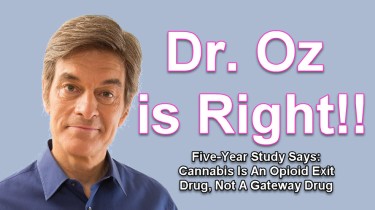
dr.oz says cannabis gets people of opioids

DR.OZ SAYS CANNABIS GET PEOPLE OF OPIOIDS, HE IS PROVEN RIGHT!

 

[ad_2]

Source link

‘No one should be in prison for marijuana,’ Biden declares

‘No one should be in prison for marijuana,’ Biden declares

[ad_1]

During a brief press availability last Saturday, July 16, President Biden shouted a few answers to reporters upon his return to the White House aboard Marine One.

A reporter asked him, among other questions, if he would be honoring his campaign pledge to release all marijuana prisoners in federal facilities. (Biden has the power to commute or pardon prisoners in the federal prison system, but not in state prisons.)

His answer: “I don’t think anyone should be in prison for the use of marijuana. We’re working on the Crime Bill now.”

Biden’s answer was…puzzling.

As President, Biden has the power to commute or pardon pretty much anyone for pretty much any crime or sentence within the federal justice system. He doesn’t need a crime bill. He doesn’t need a single vote in Congress to do it. All he needs is a pen to sign the decree.

Related

America’s winning weed Strains of Summer 2022

Here’s the official transcript released by the White House:

REMARKS BY PRESIDENT BIDEN AFTER MARINE ONE ARRIVAL

South Lawn (July 16, 2022)

Q: Is the Saudi foreign minister lying, President Biden? The Saudi foreign minister says he didn’t hear you accuse the Crown Prince of Khashoggi’s murder. Is he telling the truth?

THE PRESIDENT: No.

Q: Do you regret the fist bump, Mr. President?

THE PRESIDENT: Why don’t you guys talk about something that matters? I’m happy to answer a question that matters.

Q: Will inflation go down from here, Mr. President?

THE PRESIDENT: I’m hoping. We’ll know in the next few weeks.

Q: President Biden, will you be honoring your campaign pledge to release all the marijuana inmates in prison?

THE PRESIDENT: I don’t think there should—I don’t think anyone in pri- -anyone should be in prison for the use of marijuana. We’re working on the Crime Bill now. Thank you.

END

Bruce Barcott's Bio Image

Bruce Barcott

Leafly Senior Editor Bruce Barcott oversees news, investigations, and feature projects. He is a Guggenheim Fellow and author of Weed the People: The Future of Legal Marijuana in America.

View Bruce Barcott’s articles

[ad_2]

Source link

Colorado Springs Recreational Cannabis Initiative Qualifies for November Ballot

[ad_1]

Activists intent on legalizing recreational pot sales in Colorado Springs, Colorado cleared a significant hurdle this week with the announcement that two related adult-use cannabis sales voter initiatives have qualified for the November ballot.

The first ballot measure advanced by the group Your Choice Colorado Springs would legalize recreational weed sales in Colorado Springs, while the second would impose a 5% tax on purchases of adult-use cannabis. If passed by the voters, tax revenue from recreational sales would fund public safety improvements, expand mental health services, and support PTSD programs for veterans.

“Voters in the city stepped up and demanded their voice be heard with respect to ending the prohibition of recreational cannabis sales in Colorado Springs,” Your Choice campaign manager Anthony Carlson said on Monday after announcing the measures had qualified for the ballot. “Especially in these tough economic times, it is critical to ensure every tax dollar that rightfully belongs to Colorado Springs taxpayers stays in our community working to improve our quality of life.”

Colorado voters legalized sales of recreational cannabis with the passage of Amendment 64 in 2012, and regulated sales began in the state two years later. However, the Colorado Springs local government banned recreational cannabis sales in 2013, although the city is home to more than 100 medical dispensaries.

Your Choice Colorado Springs announced its plan for the ballot measure to legalize recreational cannabis sales in January and began circulating petitions to qualify the measures for the ballot in March. Activists had until June 20 to collect 19,245 signatures from Colorado Springs residents. The group far exceeded the requirement, turning in more than 98,000 signatures last month.

Pot Taxes Go to Other Cities

Your Choice Colorado Springs maintains that city residents who purchase adult-use cannabis legally must travel to other communities, which reap the tax benefits of recreational cannabis sales. If the initiatives succeed in this November’s election, a portion of the tax proceeds will help fund mental health services and support PTSD programs for military veterans. Colorado Springs has one of the highest veteran populations in the country, with 17% of adult residents identifying as veterans compared to the national average of 7.1%, according to a recent report from The Center Square.

“Our region led the state in suicides last year,” Carlson said, noting that 30% of those who took their own lives were veterans. “This initiative will provide significant funding to ensure we finally have the resources to take control of this crisis.”

Under the legalization initiative, no additional cannabis retail stores would be permitted in the city, but existing medical cannabis retailers would be able to add recreational cannabis on the same premise as their medical location. Karlie Van Arnam, a small business owner and lead elector sponsoring the initiatives, said the campaign “is about practicality.”

“It makes zero sense to continue the prohibition of a product that is 100% legal to possess and consume in our city,” said Arnam. “This campaign isn’t just about revenue. It’s about personal freedom and choice for our residents. It’s about supporting our small businesses and the thousands of people they employ. It’s about expanding mental health access for citizens and ensuring our veterans have access to world-class PTSD programs right here in Colorado Springs. It’s about time this decision is taken out of the hands of a few politicians and given to the people.”

Colorado Springs Mayor Opposes Legalization

Colorado Springs Mayor John Suthers, who has opposed approving recreational cannabis sales in the city for years, issued a statement warning voters about potentially negative aspects of legalizing.

“I remain vehemently opposed to legalizing recreational marijuana in Colorado Springs. There are no regulations in Colorado limiting THC levels which continue to rise and adversely impact young marijuana users,” said Suthers. “In cities with recreational marijuana, it’s not paying for the full cost of the damage it’s doing. Denver, in particular, offers a cautionary tale. In three years, it has dropped from No. 2 to No. 55 in the U.S. News & World Report rankings for best city to live. The pervasive influence of marijuana is a significant factor.”

Carlson said that despite the opposition from city leaders, voters are likely to approve the ballot measure in this November’s general election.

“Colorado Springs residents overwhelmingly voted to approve Amendment 64 in 2012. Our City Council and Mayor have repeatedly defied the will of Colorado Springs voters by keeping recreational cannabis—and its tax revenues—out of Colorado Springs for the past decade, at a loss of $150 million,” Carlson said in an email to High Times. “Now our citizens have spoken again, submitting a record 98,000 signatures—more than 2.5 times more than required—to get these measures on the ballot. The will of Colorado Springs citizens is crystal clear: They want to keep tax revenues from recreational cannabis in Colorado Springs to support efforts including mental health and veteran services.”

[ad_2]

Source link

The American Medical Association (AMA) Calls for Expungement of Marijuana-Related Arrests

The American Medical Association (AMA) Calls for Expungement of Marijuana-Related Arrests

[ad_1]

doctors for expungement

Marijuana legalization is already widespread around the United States.

It has gone a long way from being criminalized just a few decades ago. These days, one can easily purchase cannabis products in dispensaries abundantly found in dozens of states where it’s legal for medical or recreational use, or both. However, far too many Americans still suffer from the consequences that come with having criminal records due to past marijuana-related convictions and arrests.


Now, the American Medical Association, the biggest professional association of physicians, is recommending the automatic expungement of marijuana-related arrests as these cases are no longer illegal based on state cannabis laws. They released a statement that they have just given the go-signal for a resolution on this reform, stating that their objectives are “to introduce equity and fairness into the fast-changing effort to legalize cannabis.” In addition, the AMA indicates that there are at least 18 states that already legalized recreational cannabis use while over 3 dozen have allowed medical use. Despite this, there are numerous cases of people that have been convicted or arrested for weed-related offenses prior to legalization, and they are still paying the price for it.


“This affects young people aspiring to careers in medicine as well as many others who are denied housing, education, loans, and job opportunities,” says Scott Ferguson, M.D., an AMA trustee. “It simply isn’t fair to ruin a life based on actions that result in convictions but are subsequently legalized or decriminalized,” he says.


Furthermore, the new policy recommends stopping court-ordered supervisions such as parole or probation for marijuana-related arrests that have been legalized or decriminalized later on. They acknowledge that such prohibition laws aren’t applied equally since marginalized communities are often the most affected, adding that black people have been 3.6 times more likely to be incarcerated due to marijuana crimes, even if statistics show that both black and white people consume marijuana almost equally.


The irony is that the AMA has made it clear that they still oppose the legalization of marijuana, despite supporting expungement for marijuana-related crimes. While they think that legalizing cannabis for recreational purposes or marketing it as a cure-all is simply wrong, at the end of the day, one can’t deny that the plant is effective for treating many disorders.


More States Move To Expunge Past Marijuana Convictions


Recently, governors in Illinois and Colorado signed laws that would speed up the expungement of individuals with cannabis-related crimes and have their records cleared.


Democratic Gov. Jared Polis signed off Senate Bill 99 in Colorado which expands the automatic record sealing for individuals with certain cannabis infractions as well as related crimes. Meanwhile, Democratic Gov. JB Pritzker signed off HB4392 in Illinois that would amend current state laws so that petitioners who have appealed to expunge their criminal records would no longer be denied by courts just because they failed a marijuana drug test.


These moves are necessary given the massive failure of the war on drugs. Changing state laws or repealing them are not enough to erase cannabis convictions; there are millions of marijuana-related crimes all around the country that have left these people struggling with the stigma and affecting life opportunities. It’s even worse for marginalized communities that have been disproportionately affected.


There are countless talented people who should have no issue working as a medical professional in any capability. Of course we can understand the reasoning behind AMA’s stance; despite the skills and abilities of one to change and save lives by working as a medical professional, drug charges for marijuana crimes will still appear on their record and on background checks, preventing hospitals from hiring otherwise perfectly capable professionals. Because working in the medical field means that you are responsible for the lives of others, it’s normal for hospitals and physician’s offices to expect one to have moral integrity.


But just because you were charged with a minor felony in the past for possession of marijuana does not make you a less moral person, or one who is less capable of saving lives.


However, only a few states have made expungement automatic; the rest of the states lag behind, relying on manual, time-consuming processes so that records are expunged. Then there are law enforcement and government officials who argue that sealing the records are too complicated since records can’t always be easily accessed. Expungement, rather than sealing, is more effective in terms of removing a criminal conviction because doing so would completely eliminate these records while sealing a record merely prevents the public (such as your employer or potential tenant) from viewing it, though there are still ways that it can still be accessed.


Conclusion


Cannabis-related criminal records should have been expunged automatically since yesterday.


Preventing what could have been stellar doctors and other medical professionals from joining the force just because of a previous offense is ludicrous. It is helpful, though, that more states are following the trend of spreading awareness on non-discrimination for individuals who need to use medical cannabis. After all, jobs shouldn’t be all about conviction – as long as people can show that they are the right professional for the job, you can still do what’s necessary to climb the ladder and be successful in the medical field.


CANNABIS EXPUNGEMENT, READ MORE…

marijuana expungement report card

THE MARIJUANA EXPUNGEMENT REPORT CARD IS OUT! SEE THE GRADES!

[ad_2]

Source link

Wee-Delivery Chatbox
!

Wee-Delivery Assistant

How can I help you?

Hi there! 👋 Welcome to Wee-Delivery. How can I assist you today?
Call us: 888-422-9658
Hours: Mon-Fri 9am-1pm, closed 2pm-6pm, then open until 11pm. Saturday 9am-11pm, Sunday by appointment.
Delivery minimum
Are you open now?
Service areas
Verification process
Payment methods
After hours
How to order
Call 888-422-9658